

Cost of Deep Brain Stimulation in New Delhi
Deep brain stimulation, or DBS, is a surgical method of treating a particular type of Parkinson's disease. If a patient has Parkinson's disease, he might have aggravated symptoms like shaking, tremors, rigidity, and loss of movement control.
These symptoms make a person dependent on simple daily routine things. That's why it needs interventional treatment.
In the Deep brain stimulation technique, a small pacemaker device is installed in the chest area, which triggers the area of the brain which has control over the body.
These signals block some nerve conduction, which is unknowingly being passed to the organs.
This way, symptoms mainly subside.
The procedure is done in two steps. In the first step, thin wires or electrodes are placed, and in the second step, a pacemaker is installed.
Our Services for Deep Brain Stimulation in New Delhi
Transparent, professional support—without the hassles.
Book Doctor Appointment
Choose a specialist and schedule a convenient consultation.
Video or In-person Consultation
Consult remotely or meet your doctor directly at the hospital.
Compare Cost Estimates
Review transparent estimates from suitable hospitals.
Hospitalisation Support
Get coordinated assistance throughout your hospital stay.
 WhatsApp Us
Top Doctors in New Delhi
Recommended Doctors for Deep Brain Stimulation



Top Hospitals in New Delhi
Recommended Hospitals for Deep Brain Stimulation
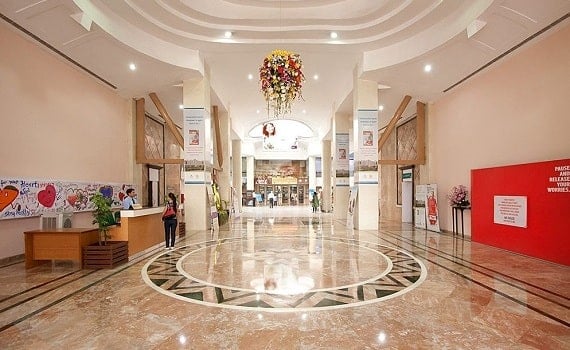
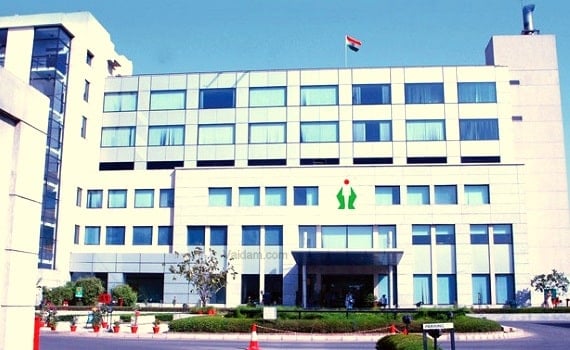
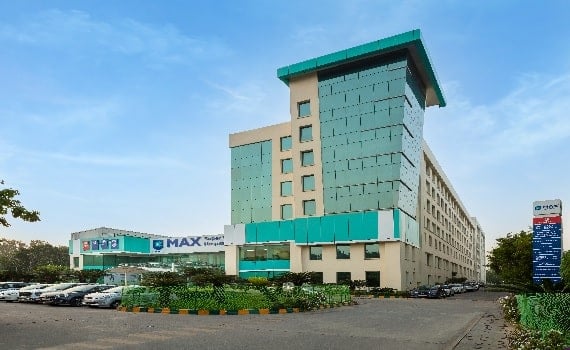
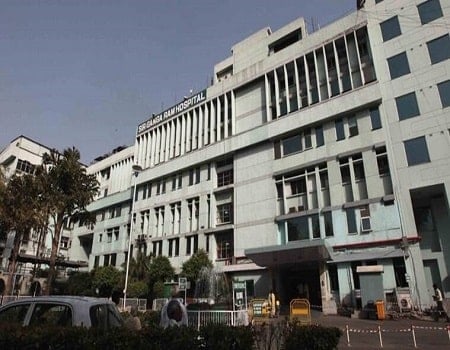






Inclusions in the package
The cost of Deep Brain Stimulation Surgery includes:
- Preoperative diagnostic tests cost (Neurological evaluations, MRI, Cognitive assessment, etc.)
- Surgery cost
- Post-Operative cost (depends on the number of follow-up sessions)
- Medicine cost
- Patient's hospital stay
Factors affecting cost of Deep Brain Stimulation
The overall cost of the procedure also varies based on the patient's condition and preferences. Some of these factors are:
- Type of hospital and room opted (General, Twin sharing or single room)
- The severity of the disease
- Post-surgical complication, if it happens (such as abnormal sensations, numbness, tingling, and involuntary muscle contractions)
- Cost of Blood products (if required)
- An extended stay at the Hospital
- Cost of Accommodation during follow-ups, in case the patient is not a local resident
Success Rate
The five-year survival rate for DBS-treated patients is around 50%, and the quality of life is being improved to a very great extent.
A patient can manage his symptoms, do day-to-day activities independently, and have a sense of independence backed up.
Everything You Need to Know About Deep Brain Stimulation: Q&A
Before the Procedure · 19 Questions
There are somewhat different criteria for determining if DBS will work for you based on your diagnosis and condition. For Parkinson’s disease, DBS is typically helpful if you experience motor fluctuations or tremors that interfere with activities that are not already adequately managed by medication, are not improved by changes in medication, or you experience side effects that prevent you from taking higher doses.
Deep brain stimulation won't cure your disease, but it may help lessen your symptoms. If deep brain stimulation works, your symptoms will improve significantly, but they usually don't go away completely.
The first surgery is the trial one in which electrodes are placed and patients movements are checked and then on the next day the surgery is completed.
Pacemakers are typically placed in the same pocket in the chest where DBS stimulators are placed. Because pacemakers are placed on the left side of the chest, the DBS stimulator could be placed on the right side of the chest.
Another alternative would be to place the DBS stimulator just under the skin of the abdomen.
The extension wires from the leads to the stimulator would be longer, which would put it at higher risk for lead fracture, but there is generally more “padding” in the abdomen, so the stimulator does not stick out as much.
A new minimum age (16) at which someone can apply for a DBS check. However, for some close indications such dystonia in young children, this age criterion can be waived.
It depends on what your symptoms are. If you have essential tremor, your tremor will not be controlled. While this is an annoyance, it is generally not considered an emergency, but you should contact your neurosurgeon or the STIM team to have the stimulator replaced as soon as possible.
If you have Parkinson’s disease, the symptoms of tremor, slowness, and stiffness may come back in full force over a couple of days. In some cases, this can be an emergency because you may be unable to move. Most patients are on less Parkinson’s medications after DBS, so the amount you are taking is unlikely to help as much as prior to surgery.
If the stimulator battery runs out if you have Parkinson’s you should contact your neurosurgeon or the STIM team as soon as possible. They may tell you to go into the emergency room, and an urgent battery replacement will be scheduled.
If you have dystonia, the symptoms of your dystonia may come back over days to weeks. Again, this will be more of an urgent issue, and you should contact the DBS neurosurgeon or STIM team as soon as possible.
Following up with your DBS team for regular monitoring of your battery will greatly reduce the chances of your battery running out unexpectedly.
Includes Seizures, Infection, Headache, Confusion, Difficulty concentrating, Stroke, Hardware complications such as an eroded lead wire and Temporary pain and swelling at the implantation site.
With a non-rechargeable battery, you live free from tremors until your battery runs out. You'll have surgery to replace the battery approximately every 3-5 years, but some people need to replace it in much less time.
Although DBS is excellent for helping the tremor that is experienced in the hands and arms due to essential tremor, it is unlikely that DBS will help your voice with just a unilateral lead.
Although there may be patients who notice a slight improvement in voice with unilateral stimulation, most notice no improvement.
With bilateral stimulation, the voice tremor may improve, but bilateral stimulation will often cause slurred speech as well. Botulinum toxin injections are generally more effective for voice tremor than DBS.
If trial surgery is successful there are 98% chances of a successful surgery.
There are somewhat different criteria for determining if DBS will work for you based on your diagnosis and condition. For Parkinson’s disease, DBS is typically helpful if you experience motor fluctuations or tremors that interfere with activities that are not already adequately managed by medication, are not improved by changes in medication, or you experience side effects that prevent you from taking higher doses.
Deep brain stimulation won't cure your disease, but it may help lessen your symptoms. If deep brain stimulation works, your symptoms will improve significantly, but they usually don't go away completely.
The first surgery is the trial one in which electrodes are placed and patients movements are checked and then on the next day the surgery is completed.
Pacemakers are typically placed in the same pocket in the chest where DBS stimulators are placed. Because pacemakers are placed on the left side of the chest, the DBS stimulator could be placed on the right side of the chest. Another alternative would be to place the DBS stimulator just under the skin of the abdomen. The extension wires from the leads to the stimulator would be longer, which would put it at higher risk for lead fracture, but there is generally more “padding” in the abdomen, so the stimulator does not stick out as much.
A new minimum age (16) at which someone can apply for a DBS check. However, for some close indications such dystonia in young children, this age criterion can be waived.
If trial surgery is successful there are 98% chances of an successful surgery.
Although DBS is excellent for helping the tremor that is experienced in the hands and arms due to essential tremor, it is unlikely that DBS will help your voice with just a unilateral lead. Although there may be patients who notice a slight improvement in voice with unilateral stimulation, most notice no improvement. With bilateral stimulation, the voice tremor may improve, but bilateral stimulation will often cause slurred speech as well. Botulinum toxin injections are generally more effective for voice tremor than DBS.
With a non-rechargeable battery, you live free from tremor until your battery runs out. You'll have surgery to replace the battery approximately every 3-5 years, but some people need to replace it in much less time.
Includes Seizures, Infection, Headache, Confusion, Difficulty concentrating, Stroke, Hardware complications such as an eroded lead wire and Temporary pain and swelling at the implantation site.
During the Procedure · 4 Questions
The length of the operation also depends on the technique used by each center, but it often lasts between 3-6 hours from start to finish.
As long as the electrodes are accurately placed, without complications, the recovery period usually lasts from between 3 to 5 days.
Hospital stay is for three days.
3 days in hospital.
The length of the operation also depends on the technique used by each centre, but it often lasts between 3-6 hours from start to finish. As long as the electrodes are accurately placed, without complications, the recovery period usually lasts from between 3 to 5 days.
Post the Procedure · 9 Questions
You have an especially high risk of falling in the weeks after DBS. Patients often become overconfident just after surgery.
If you used a walker or cane before surgery, keep using it for a while until you are stronger and steadier. Keep your incisions clean and dry for the first two weeks after surgery.
The patient is usually called after 5 years to change the battery if patient opted for nonrechargeable batteries.
Yes, your doctor will advise you on the tapering down of the medicines. It can be 1/10 of the original dose or even be dose free depending upon the results post-surgery.
The sutures are removed one week after surgery and DBS programming can be done at this visit. We recommend avoiding strenuous activity for the first month postoperatively.
When flying, patients should take their patient controller device with them to be able to verify whether the DBS is on or off.
You have an especially high risk of falling in the weeks after DBS. Patients often become overconfident just after surgery. If you used a walker or cane before surgery, keep using it for a while until you are stronger and steadier. Keep your incisions clean and dry for the first two weeks after surgery.
Patient is usually called after 5 years to change the battery, if patient opted for non rechargeable batteries.
Это зависит от того, какие у вас симптомы. Если у вас есть существенный Тремор, ваш Тремор не будет контролироваться. Хотя это раздражает, обычно это не считается чрезвычайной ситуацией, но вы должны связаться со своим нейрохирургом или командой стим, чтобы как можно скорее заменить стимулятор. Если у вас болезнь Паркинсона, симптомы тремора, медлительности и скованности могут вернуться в полную силу в течение нескольких дней. В некоторых случаях это может быть чрезвычайной ситуацией, потому что вы можете быть не в состоянии двигаться. Большинство пациентов принимают меньше лекарств от болезни Паркинсона после ДБС, поэтому количество, которое вы принимаете, вряд ли поможет так же сильно, как до операции. Если батарея стимулятора разрядилась, если у вас болезнь Паркинсона, вам следует как можно скорее связаться со своим нейрохирургом или командой стим. Они могут сказать вам, чтобы вы отправились в отделение неотложной помощи, и будет назначена срочная замена батареи. Если у вас есть дистония, симптомы вашей дистонии могут вернуться через несколько дней или недель. Опять же, это будет более срочный вопрос, и вам следует как можно скорее связаться с нейрохирургом DBS или командой STIM. Последующая работа с вашей командой DBS для регулярного мониторинга вашей батареи значительно уменьшит вероятность того, что ваша батарея неожиданно разрядится.
Yes, your doctor will advice you on the tapering down of the medicines.It can be 1/10 of the original dose or even be dose free depending upon the results post surgery.
The sutures are removed one week after surgery and DBS programming can be done at this visit. We recommend avoiding strenuous activity for the first month post-operatively.When flying, patients should take their patient controller device with them to be able to verify whether the DBS is on or off.
 Chat
Chat