

Cost of Gastric Banding Surgery in Turkey
Our Services for Gastric Banding Surgery in Turkey
Transparent, professional support—without the hassles.
Book Doctor Appointment
Choose a specialist and schedule a convenient consultation.
Video or In-person Consultation
Consult remotely or meet your doctor directly at the hospital.
Compare Cost Estimates
Review transparent estimates from suitable hospitals.
Hospitalisation Support
Get coordinated assistance throughout your hospital stay.
 WhatsApp Us
Top Doctors in Turkey
Recommended Doctors for Gastric Banding Surgery

Top Hospitals in Turkey
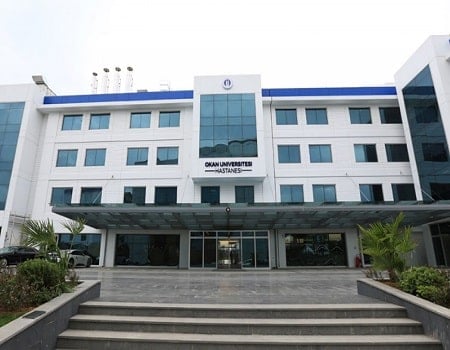
Recommended Hospitals for Gastric Banding Surgery














Success Rate
Frequently Asked Questions Related to Gastric Banding Surgery Cost
Before gastric banding surgery, several tests are done, such as a complete blood count (CBC), urinalysis, chemistry panel, chest X-ray, and ECG. The test costs are covered in the package.
The medicines consumed by the patient in the hospital are included in the package. However, if patients buy medicines from outside the hospital, they will pay for them separately.
The patient needs to stay in the hospital for 2-3 days after the surgery. They need to visit the doctor for the first follow-up meeting 2-3 weeks after the surgery and a second visit 4-5 weeks after the surgery. There will be four to six follow-up meetings during your first post-surgery year, and then visits are scheduled at six to twelve-month intervals for an indefinite period.
Patients can resume their normal activities two weeks after the surgery. Regular follow-up appointments are necessary after the surgery to avoid any post-treatment expenses.
Health insurance now covers gastric band surgery for those who are obese and who tip the scales at 100kg or more over their normal body weight.
You can go for the gastric balloon. It is a non-surgical newer technique designed to help obese patients to lose weight when their BMI is below the standard gastric band surgery BMI threshold.
Everything You Need to Know About Gastric Banding Surgery: Q&A
Before the Procedure · 5 Questions
Gastric banding surgery is a surgical procedure which is being used in treating the condition of severe obesity, in this procedure a small adjustable band is being placed near the upper stomach to make it a pouch shape which empties into the remaining stomach all the way through a narrow outlet.
Yes, gastric band is a major surgery it can result in significant weight loss and also improves obesity-related conditions like type 2 diabetes and high blood pressure.
After the surgery you will experience some pain and discomfort which is normal during recovery which can be easily controlled by taking medications
Gastric band surgery is very simple and safe procedure, no permanent changes are being made in the stomach.
The results of the gastric banding surgery vary considerably among patients and this procedure is not very commonly performed procedure. This procedure can be reversed in some cases
During the Procedure · 3 Questions
Gastric band surgery is done under general anaesthesia and it is completed within 45 minutes.
Gastric band surgery is usually done by a plastic surgeon or general surgeons.
In gastric band surgery the surgeon will make one to five small surgical cut in your abdomen region, through that cut the surgeon will place the camera and then the surgeon will place a band around the upper part of your stomach for separating it from the lower.
Post the Procedure · 5 Questions
On an average it will take around one week to recover from gastric band surgery, patient will be completely recovered within 2 weeks after surgery.
Immediately after the surgery you will experience some pain and discomfort which can easily be controlled by taking medicines.
You can return back to your normal activity within 6 to 8 weeks of the procedure.
Gastric band surgery is permanent and it stays forever throughout the life, even though there are some post operative complication of the procedure which can be easily tolerable.
Some of the side effects of gastric band surgery includes acid reflux, nausea, vomiting, infection, dilation of the esophagus, weight gain or failure to loose weight.
 Chat
Chat