

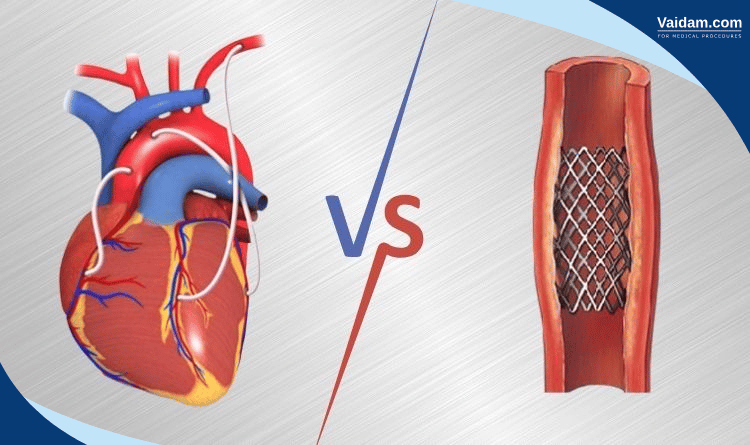
Blocked arteries are one of the leading causes of heart disease worldwide and can be life-threatening if left untreated. When blood flow to the heart becomes restricted, it often results in chest pain, shortness of breath, and, in severe cases, heart attacks. Fortunately, modern medicine offers two highly effective solutions to restore blood flow: stent placement (angioplasty) and bypass surgery (CABG – coronary artery bypass grafting).
But this leads to one of the most common and important questions: When is a stent better than bypass surgery?
In this blog, we’ll break down both options, compare their benefits and risks, and explain the situations where doctors recommend one treatment over the other so you can feel more informed and confident about your care.
Understanding Blocked Arteries
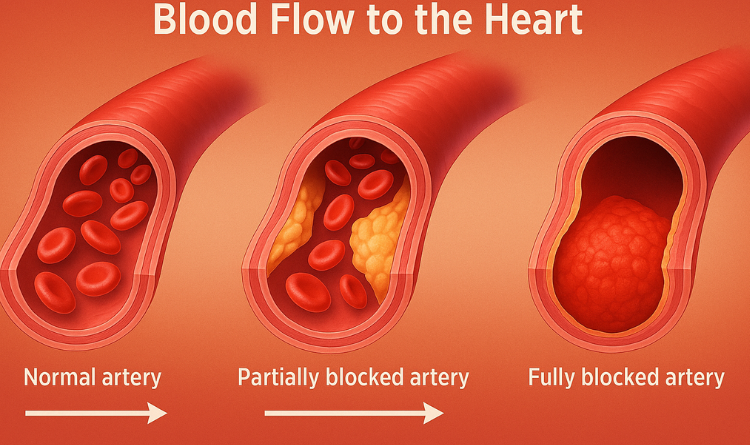
Arteries supply oxygen-rich blood to the heart. Over time, fatty deposits called plaque (cholesterol, calcium, and fibrous tissue) can build up, narrowing the arteries; a condition known as coronary artery disease (CAD).
When blood flow is severely restricted, you can experience:
- Chest pain or pressure during activity (angina)
- Fatigue and breathlessness
- Dizziness or palpitations
- Increased risk of heart attack
At this stage, lifestyle changes and medications may not be enough. Doctors often recommend angioplasty with a stent or bypass surgery to restore blood flow.
What is Angioplasty with a Stent?
Angioplasty (Percutaneous Coronary Intervention – PCI) is a minimally invasive procedure where a thin catheter with a small balloon is inserted into the blocked artery. The balloon is inflated to open the artery, and a stent (tiny wire mesh tube) is placed to keep it open.
Key Points About Stent (Angioplasty):
- Procedure time: 1–2 hours
- Hospital stay: Usually 1–2 days
- Recovery: Quick, return to normal activities within a week
- Best for: One or two blocked arteries, less complex cases
What is Bypass Surgery (CABG)?
Coronary Artery Bypass Grafting (CABG) is a major surgical procedure where surgeons take a blood vessel from the leg, arm, or chest and create a new route (“bypass”) around the blocked arteries, restoring blood supply to the heart.
Key Points About Bypass Surgery:
- Procedure time: 3–6 hours
- Hospital stay: 5–7 days
- Recovery: 6–12 weeks
- Best for: Multiple or complex blockages, diabetic patients, or patients with weak heart function
When is a Stent Better?
Doctors often recommend angioplasty with a stent in the following situations:
- Single or Double Vessel Disease: If only one or two arteries are blocked, stents are usually preferred.
- Patients Unfit for Surgery: Older patients or those with other health issues (lung disease, kidney problems) may not tolerate bypass surgery well.
- Emergency Heart Attack Cases: During an acute heart attack, stents can be placed quickly to restore blood flow and save heart muscle.
- Faster Recovery Needed: Patients who want to return to work or daily activities quickly often opt for stents.
- Lower Surgical Risk: Angioplasty is less invasive, making it safer for patients at high surgical risk.
When is Bypass Surgery Better?
Bypass surgery is the gold standard in cases where long-term results are more important than short-term convenience:
- Multiple Blockages (Triple Vessel Disease): If 3 or more arteries are blocked, bypass surgery provides better long-term survival.
- Left Main Artery Disease: When the main artery supplying blood to the heart is blocked, CABG is safer.
- Diabetes Patients: Studies show that diabetic patients with multiple blockages live longer with bypass surgery than with stents.
- Weakened Heart Function: For patients with poor pumping ability of the heart (low ejection fraction), bypass is more effective.
- Failed Angioplasty: If stents don’t work or arteries re-narrow, bypass is the next option.
Pros and Cons of Stents (Angioplasty)
Advantages:
- Quick and minimally invasive
- Short hospital stay and fast recovery
- Suitable for emergency situations
- Lower upfront cost compared to bypass
Disadvantages:
- Higher chance of re-narrowing (especially without drug-eluting stents)
- May require repeat procedures
- Not effective for widespread or complex blockages
Pros and Cons of Bypass Surgery
Advantages:
- Provides long-lasting relief in severe cases
- Better for multi-vessel disease and diabetics
- Reduces the risk of repeat hospitalization compared to stents
Disadvantages:
- Major surgery with a higher initial risk
- Longer hospital stay and recovery
- Higher upfront cost compared to stents
Recovery After Stent vs Bypass Surgery
Recovery time of both procedures is:
- Stent (Angioplasty): Resume work in 1–2 weeks, avoid heavy lifting for a month.
- Bypass (CABG): Full recovery in 2–3 months, with cardiac rehab strongly advised.
Success Rate
When comparing stents and bypass surgery, understanding their long-term effectiveness helps make confident decisions.
- Stent: 90–95% success, but 5–15% risk of re-narrowing.
- Bypass: 95–98% success, longer-lasting (10–15 years), especially effective in diabetics and multi-vessel disease.
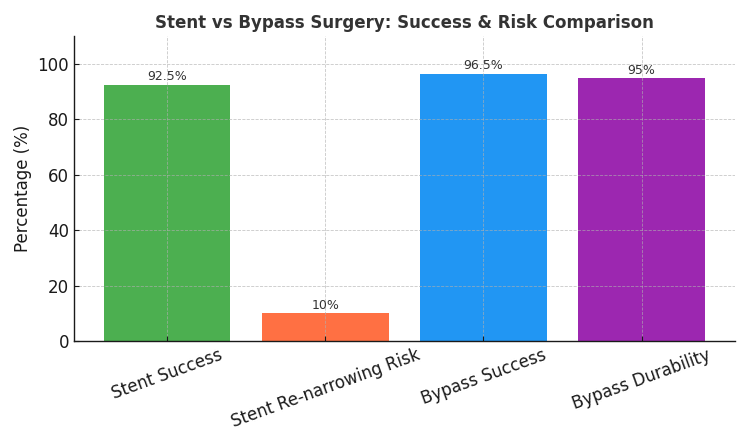
Both treatments have high success rates, but the right choice depends on the severity of blockages, overall health, and the doctor’s recommendation.
Cost Considerations: Stent vs Bypass Surgery in India
|
Treatment |
Approximate Cost (INR) |
USD |
|
Angioplasty with Stent |
1,60,000 – 2,20,000 |
1,920 – 2,640 |
|
Bypass Surgery (CABG) |
1,80,000 – 2,40,000 |
2,160 – 2,880 |
Costs vary depending on hospital, type of stent, and patient condition.
Final Thoughts
Choosing between a stent (angioplasty) and bypass surgery is one of the most critical decisions for patients with blocked arteries. While angioplasty is quick, less invasive, and ideal for limited blockages, bypass surgery provides a more durable solution for complex or multi-vessel disease.
The best approach is personalized treatment, which is decided after consultation with your cardiologist, reviewing test results, and considering your lifestyle, health risks, and future goals.
Blocked arteries are serious, but with modern treatments, patients can live longer, healthier, and more active lives.


 Chat
Chat