


Breast cancer, due to its high prevalence, has become a familiar name among new diseases. While it is most often associated with women, it is important to note that men can also be affected by this condition, though less commonly.
For patients seeking world-class treatment at affordable prices, India has emerged as a leading destination for advanced breast cancer treatment.
According to several sources, nearly 100,000 international patients travel to India each year for cancer treatment, including breast cancer care.
This blog will help you prepare for your treatment journey to India for breast cancer.
Why Should You Choose India for Breast Cancer Treatment?
-
High-Quality Medical Care
India boasts numerous hospitals that are internationally accredited (JCI) and equipped with cutting-edge technology. Leading institutions offer specialised breast cancer treatment with a focus on personalised care.
-
Cost-Effective Treatment
The cost of breast cancer treatment in India is significantly lower compared to countries like the US, UK, or Australia, without compromising on quality. This makes it an attractive option for international patients seeking affordable yet effective treatment options.
-
Comprehensive Treatment Options
From early-stage treatment to advanced surgical procedures, chemotherapy, radiotherapy, and immunotherapy, India offers a wide range of treatment options.
-
Short Waiting Times and Patient-Centered Care
Unlike in some Western countries, where patients may face long waiting times for treatment, India offers fast access to consultations, diagnostic tests, and treatment, reducing delays in care.
What is Breast cancer and its Symptoms?
Breast cancer, irrespective of gender, arises from the uncontrolled growth of cells in the breast tissue and can affect anyone, regardless of age or lifestyle.
Some common symptoms of breast cancer include:
- Asymmetry in the size of the breast or nipple
- Breast lump, bulge with prominent blood vessels prominent
- Colour change of skin or nipple area
- Discharge from nipple
What are Risk Factors for Breast Cancer?
Lack of Physical Activity
The Centers for Disease Control and Prevention suggests that women who are active for at least four hours a week have an 11% lower risk of breast cancer compared to those with less active lifestyles.
Obesity
Researchers have found that women with a BMI of more than 28 kg/m2 have a 23% higher risk of developing breast cancer as compared to those with a low BMI.
Family History
Having a relative suffering from breast cancer nearly doubles a woman’s risk. Around 5-10% of breast cancer arises as a result of having breast cancer in family history.
Mutation in tumour suppression gene
Genetic mutations in the BRCA1 and BRCA2 genes significantly elevate breast cancer risk. Women with these mutations face a risk of having breast cancer up to 70%.
Do you know?
Approximately 1 in 40 Ashkenazi Jewish women, a descendant from Jews who lived in Central or Eastern Europe have mutated genes, specifically in the BRCA1 or BRCA2. This rate is 10 times higher than that in other populations.
Exposure to Radiation
While the patient is undergoing radiation therapy for the treatment of other cancers, at the same time, it may also increase the risk of developing breast cancer in the surrounding area if the radiation is not precise.
Chemical Exposure
Prolonged exposure to certain chemicals, such as those found in pesticides or industrial byproducts, has been linked to breast cancer, although more research in this context is still awaited.
Age and Other Non-Modifiable Risks
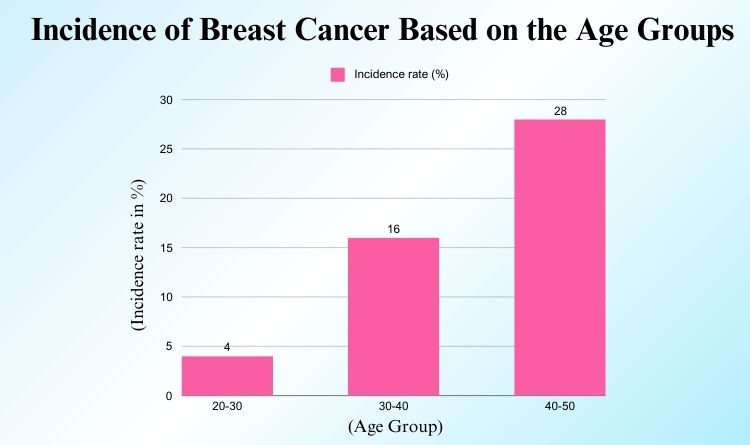
The risk of breast cancer increases with age, with most diagnoses occurring in women over 50.
Common Approaches for Breast Cancer Treatment
Surgical Treatment for Breast Cancer
- Lumpectomy
This surgery involves removing only the tumour and a small margin of surrounding healthy tissue while preserving the majority of the breast.
The success rate for lumpectomy in India is high, with local recurrence rates of 5-10% within 5 years when followed by radiation therapy.
If combined with radiation therapy, the 5-year survival rate can be around 90-95% for patients with early-stage breast cancer.
- Modified Radical Mastectomy
This procedure involves the removal of the entire breast and some of the lymph nodes under the arm, but the chest muscles remain intact.
The 5-year survival rate for patients who undergo modified radical mastectomy is around 85-90%, depending on the cancer stage at diagnosis and the involvement of lymph nodes.
- Breast Conservation Surgery / Oncoplasty
It is a combination of tumour removal and reshaping of the breast using cosmetic techniques, preserving as much of the breast as possible.
Success rates for oncoplasty are similar to lumpectomy, with a 5-year survival rate of around 85-90%. This method is particularly beneficial for patients seeking breast preservation with a good cosmetic result.
- Mastectomy with Reconstruction
It involves the removal of the entire breast, followed by reconstruction using either implants or tissue from another part of the body (such as the abdomen, back, or thigh).
The 5-year survival rate in India for mastectomy with reconstruction is generally high, with estimates ranging between 85-90%, depending on cancer staging and the success of the reconstruction.
- Reconstructive Surgery
It is performed after a mastectomy, reconstructive surgery rebuilds the breast shape using implants or tissue from another body part.
The success of reconstructive surgery is typically high, with most patients achieving satisfactory cosmetic outcomes.
Non-Surgical Treatments for Breast Cancer
- Chemotherapy
Chemotherapy uses medications to attack and destroy cancer cells. This treatment is given after surgery to reduce the risk of recurrence.
Chemotherapy can reduce the risk of recurrence by about 30-50% in patients with early-stage breast cancer.
The 5-year survival rate for patients who receive chemotherapy after surgery is typically 85-90%, depending on the cancer type, stage, and individual response to the drugs.
- Hormone Therapy
This is used for hormone-sensitive cancers, where this therapy works by blocking or lowering the levels of hormones like estrogen and progesterone, which fuel the growth of certain types of breast cancer.
Hormone therapy has been shown to reduce the risk of recurrence by 40-50% in hormone receptor-positive breast cancers.
The 5-year survival rate for patients receiving hormone therapy can be as high as 90-95% for early-stage cancers.
- Radiation Therapy
It uses high-energy rays or particles to kill cancer cells or shrink tumours. It is often used after surgery to destroy remaining cancer cells in the breast or nearby lymph nodes.
In patients with early-stage breast cancer, radiation can reduce the risk of recurrence by 50-60%, with a 5-year survival rate of around 90%.
- Concurrent Chemoradiotherapy (CCRT)
This is a combination treatment where chemotherapy and radiation therapy are given at the same time. This is typically used to enhance the effectiveness of radiation.
CCRT has been shown to improve local control of cancer, with survival rates in the range of 70-85% for patients with advanced or aggressive cancers.
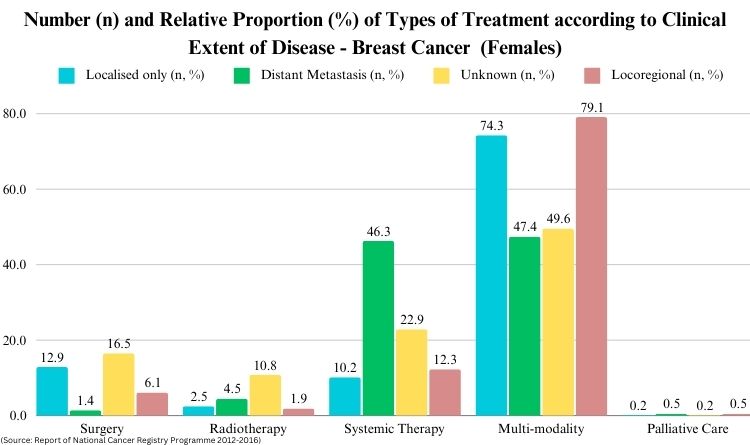
Advanced Breast Cancer Treatment in India
Immunotherapy with Checkpoint Inhibitor
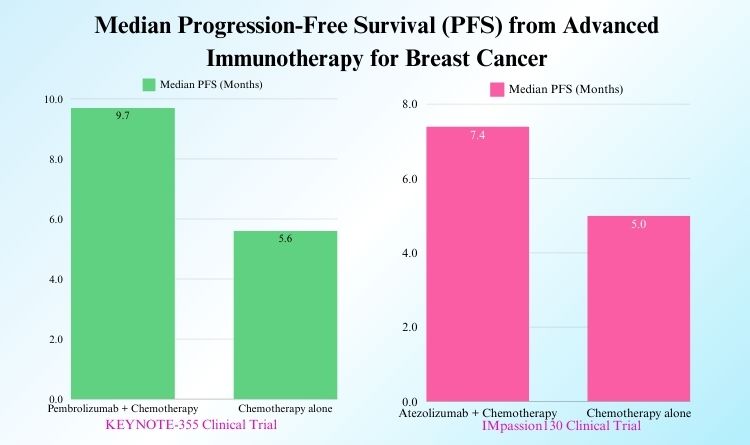
- Immunotherapy has shown promising results in Triple-negative breast cancer (TNBC). Checkpoint inhibitors like pembrolizumab have been approved for use in advanced TNBC, offering hope for patients with otherwise limited treatment options.
- Biomarkers like PD-L1 expression levels are used to predict which patients might benefit from treatment.
Tyrosine kinase inhibitors (TKIs)
These drugs block the HER2 protein protein’s ability to send signals that tell cancer cells to grow and divide. Examples of TKIs used to treat HER2-positive breast cancer include lapatinib (Tykerb) and neratinib (Nerlynx).
Next Generation Sequencing for Cancer Profiling
NGS helps in identifying genetic mutations and alterations that are characteristic of different types of breast cancer, including:
- ER-positive breast cancer: Identifies mutations in the estrogen receptor (ER) gene.
- HER2-positive breast cancer: Detects amplifications of the HER2 gene.
- Triple-negative breast cancer (TNBC): Identifies mutations in genes such as BRCA1/2, TP53, and PIK3CA, which are common in TNBC.
Cost of Different Types of Breast Cancer Treatment in India
The cost of breast cancer treatment in India is influenced by the following factors:
- Type and Stage of Cancer: Advanced stages or aggressive types require more intensive treatment, increasing costs.
- Treatment Type: Options like targeted therapy or reconstruction are costlier than chemotherapy or basic surgeries.
- Hospital and Location: Premium hospitals in metropolitan areas are more expensive than smaller or government hospitals.
- Technology Used: Advanced techniques (e.g., robotic surgery or 3D radiation therapy) drive up costs.
- Number of Cycles or Sessions: Extended treatment durations significantly add to expenses.
- Patient Factors: Co-morbidities and complications may increase overall costs.
|
Procedure |
Cost in INR |
Approx. Cost in USD |
|
Lumpectomy Surgery |
1,50,000 to 2,50,000 |
$2,000 to $3,500 |
|
Modified Radical Mastectomy |
70,000 to 1,20,000 |
$1,000 to $1,500 |
|
Breast Conservation Surgery (Oncoplasty) |
1,85,000 to 2,80,000 |
$4,000 to $6,000 |
|
Mastectomy with Reconstruction |
1,00,000 to 3,00,000 |
$9,000 to $12,000 |
|
Reconstructive Surgery After Mastectomy |
1,00,000 to 2,00,000 |
$1,500 to $3,000 |
|
Chemotherapy (per cycle) |
30,000 to 40,000 |
$600 to $700 |
|
Targeted Therapy (per cycle) |
1,00,000 to 1,50,000 |
$1,800 to $2,700 |
|
Radiation Therapy |
2,00,000 to 3,00,000 |
$4,000 to $6,000 |
|
Concurrent chemoradiotherapy (CCRT) |
2,00,000 to INR 3,00,000 |
$ 2,800 to $ 4,200. |
Best Hospitals for Breast Cancer Treatment in India
If you are looking for the best cancer hospitals in India, here’s a list for you. All these hospitals are known for the best cancer treatment and are JCI and NABH-accredited.
Fortis Memorial Research Institute, Gurgaon
FMRI was established in 2001 and specialises in a multi-disciplinary cancer care approach. The breast cancer unit at Fortis focuses on early diagnosis and treatment, with options for minimally invasive surgery and robotic surgeries. They also offer a wide range of treatments, including chemotherapy, radiation therapy, and hormone therapy, as well as psychological counselling and support for patients and their families.
Medanta - The Medicity, Gurgaon
This hospital was established in 2009, and its cancer care is known for its advanced technology, including robotic surgery, minimally invasive techniques, and proton therapy, to offer cutting-edge treatments.
Kokilaben Dhirubhai Ambani Hospital, Mumbai
Established in 2008, this hospital has a dedicated cancer care centre that provides a personalised treatment plan and comprehensive care, including chemotherapy, surgery (breast conservation or mastectomy), targeted therapy, immunotherapy, and radiation.
BLK-Max Super Speciality Hospital, Delhi
BLK-Max has a strong reputation in oncology, providing a multi-disciplinary approach since 1959. They offer advanced diagnostic imaging, and options like breast conservation surgery, mastectomy, chemotherapy, and hormone therapy.
Apollo Hospitals, Greams Road, Chennai
Apollo Hospitals has a dedicated cancer institute known for its world-class facilities and advanced technology. Their approach is comprehensive, incorporating prevention, screening, early detection, treatment, and rehabilitation. They provide a patient-centric approach with the use of personalised medicine and cutting-edge technology.
Best Doctors for Breast Cancer Treatment in India
If you are looking for the top cancer treatment doctors in India, here’s a list for you.
He is a well-known breast cancer surgeon in India with more than 24 years of experience. He has started the Minimal Access (Laparoscopic & Robotic) Surgery Unit in Fortis Hospital for cancer.
He is one of India's leading Medical Oncologists, boasting 23 years of experience. Through his clinical trial research, he has made significant contributions to cancer chemotherapy, including the development of drugs that minimise the side effects of anti-cancer chemotherapy agents.
He is a renowned Surgical Oncologist, with an overall experience of nearly 24 years. He has performed over 100 laparoscopic surgeries and performed breast cancer surgeries with minimal invasive approach.
My mother underwent five cycles of chemotherapy. Vaidam Health supported us day and night in India, and they were very helpful since the day we arrived in India. Thank you for assisting us for 3 months during my mother’s treatment.
Son of Ms. Roza Woldeamlak, a breast cancer patient from Ethiopia.
What Happens Before, During and After Breast Cancer Surgery?
Before Breast Cancer Surgery
- You may need to take some blood examinations and imaging scans. If lymph nodes are being checked, you might undergo a sentinel lymph node mapping.
- You may be asked to stop blood thinners, aspirin, or anti-inflammatory drugs several days before surgery to reduce bleeding risks.
During Surgery
- A nurse or anesthesiologist will check your vitals and review your medical history one last time.
- If you’re having sentinel lymph node surgery (to check if cancer has spread to the lymph nodes), a special dye or radioactive tracer might be injected into the area around the tumour.
- Once everything is ready, the anesthesiologist will administer general anaesthesia so you’ll be completely asleep and won’t feel any pain.
- Based on the decided treatment plan, surgery would be performed. It could be a lumpectomy or mastectomy.
The duration of breast cancer surgery is 1-3 hours for lumpectomy and 2-6 hours for mastectomy.
For breast reconstruction, an additional 2 hours would be required.
After the Surgery
After the cancerous tissue is removed:
- The surgeon will carefully close the incision using stitches or surgical glue.
- A small drain might be placed under your skin to remove excess fluid during recovery (this will be removed in a week or two).
Once the surgery is over, you will be shifted to a recovery room. You may feel some tightness or soreness in the surgical area, but this is normal and will be managed with pain relief.
Follow-up Treatments
Other treatments like radiation therapy, chemotherapy, and hormone therapy may sometimes be required to be sure all cancer cells are eradicated after the surgery.
In general, most patients can expect to spend a few hours in the hospital after the procedure, with a hospital stay ranging from 1 to 3 days. For minimally invasive surgeries like lumpectomy, recovery tends to be faster, and patients may be able to return to normal activities within 1 to 2 weeks.
Rehabilitation and Follow-up Care After Breast Cancer Surgery in India
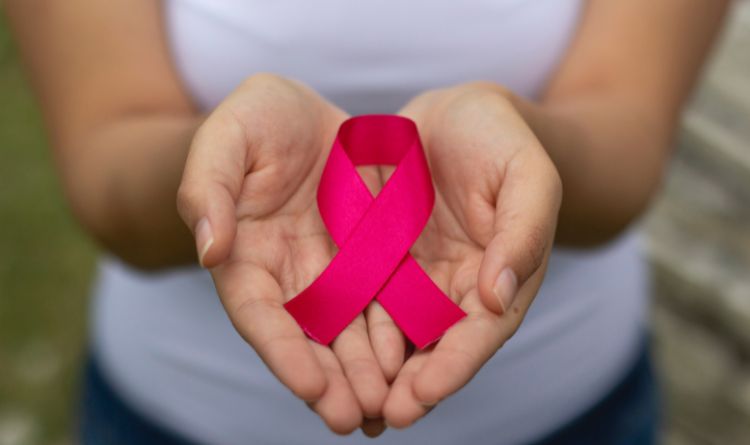
Recovering from breast cancer surgery is a journey of healing, both physically and emotionally. In the best cancer hospitals in India, rehabilitation and follow-up care are integral parts of this process, ensuring that patients regain their strength, confidence, and quality of life.
In India, many hospitals offer specialised physiotherapy programs for breast cancer patients. These programs focus on:
- Gentle arm and shoulder exercises to regain mobility.
- Techniques to improve posture and reduce scar tissue stiffness.
- Lymphedema prevention and management through compression garments and massages.
- Many hospitals have in-house psychologists or counsellors to help patients process their emotions.
India’s expanding network of cancer care centres makes sure that patients can access top-quality rehabilitation services no matter where they live.
What are the Documents Required to Travel for Breast Cancer Surgery in India?
- Valid Passport and medical visa
- A letter from the hospital confirming the treatment and appointment details
- Medical Records
- Proof of Financial Support
- A recommendation letter from your oncologist
- Identification Proof
- Consent form If applicable
- Documents of the caregiver
How Can Vaidam Help You in Getting the Best Breast Cancer Treatment in India?
At Vaidam Health, we understand that facing breast cancer can be overwhelming, and we’re here to make the process easier for you.
As a trusted medical travel assistant accredited by NABH (National Accreditation Board for Hospitals & Healthcare Providers), we specialise in connecting patients to the best hospitals and doctors in India.
Let’s have a look at a step-by-step procedure on how we assist you in getting breast cancer treatment in India.
- Connect with Vaidam Health
Start by reaching out to us through our website or a phone call. Our case manager will gather all the details about your diagnosis, medical history, and treatment needs.
We connect you with top oncologists in India to review your case.
If needed, we’ll help you get a second opinion from a trusted specialist to confirm your treatment plan.
- Choose the Right Hospital and Doctor with us
We’ll recommend the list of the best hospitals and doctors for breast cancer treatment in India based on your preferences.
You can choose from the list by analysing their expertise and individual clinical case experience.
- Plan Your Budget with Transparency
Vaidam provides detailed cost estimates for your treatment, including surgery, medications, and hospital stay. This ensures there are no financial surprises and your journey to India is hassle-free.
- Get Your Travel Documents Ready
For international patients, our team will assist you with:
- Documentation and application process for medical visa
- Arranging cost-effective travel options from flight bookings to airport pick-ups
- Choosing from a range of comfortable stays near your chosen hospital
- Language translation for non-English speaking patients
- Pack Wisely for Your Trip
- Medical reports, imaging scans, and prescriptions
- Personal identification documents and passports
- Contact details for your Vaidam representative for on-ground assistance.
- Arrive in India with Peace of Mind
From the moment you land, Vaidam takes care of your:
- Airport pick-up to your selected hospital
- First consultation
- Pre-treatment tests are scheduled in advance
Once your treatment is complete, Vaidam ensures you have access to follow-up care, both in India and after you return to your country. We’ll keep you connected with your doctor for online consultations and recovery support as well.
Frequently Asked Questions Related to Breast Cancer Treatment in India
What are the documents required to travel for breast cancer surgery in India?
Is genetic testing for breast cancer available in India?
Tests like BRCA1/2 gene testing are offered at the top cancer centres in India.
What are the common treatment options for breast cancer in India?
Breast cancer treatment in India includes surgery, chemotherapy, radiation, hormone therapy, targeted therapy, and immunotherapy, depending on the type and stage of breast cancer.
Is breast cancer treatment in India cost-effective?
Yes, breast cancer treatment in India is cost-effective compared to many Western countries, with high-quality care available at various price ranges.
How is breast cancer diagnosed in India?
For diagnosis, mammograms, ultrasound, biopsies, MRI, and genetic testing are done to determine cancer type and stage for personalised treatment plans.
Can I opt for breast reconstruction after mastectomy in India?
Yes, breast reconstruction is available post-mastectomy, using implants or autologous tissue, offered by skilled surgeons at leading hospitals.
Are there advanced technologies available for breast cancer treatment in India?
Yes, India offers advanced treatment options like robotic surgery, targeted therapy, proton therapy, and cutting-edge imaging techniques.
What is the success rate of breast cancer treatment in India?
The success rates depend on early diagnosis and treatment. Early-stage breast cancer has a high survival rate, with many hospitals reporting over 80-90% survival.
 Chat
Chat