

Dr. Sekar Wariar: Most Profiecient Interventional Cardiologist in Dubai
Dr Sekar Wariar is a reputed and the best Interventional Cardiologist in Abu Dhabi, with over 20+ years of experience. His specialization lies in Preventive and Rehabilitative Cardiology, Angioplasty, Pacemaker Implantation Surgery, Angiography (Including Non-Ionic Contrast). He is currently associated with Life Care Hospital, Abu Dhabi, which is one of the most reputed hospitals in the UAE.
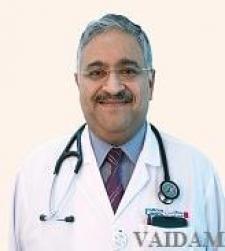
He completed his MBBS and MD (Internal Medicine) degrees from Ahmedabad's B.J. Medical College. He received his DM (Cardiology) from Pune University's Armed Forces Medical College. He is an active member of the Indian Cardiological Society and the Middle East Healthcare Professionals Association. He has a long list of international publications, articles, and talks to his name. Dr Sekar Wariar speaks Hindi, Malayalam, and English fluently. Dr Sekar has many years of work experience with many hospitals as :
- Consultant, Apollo Hospitals, Greams Road, Chennai
-
Visiting Consultant, Vijaya Hospital, Chennai
-
Consultant, Lakshmi Hospital, Kerala
-
Consultant, KVM Hospital, Kerala
-
Consultant, Cochin Hospital, Kerala
-
Consultant, EMS Memorial Cooperative Hospital & Research Centre, Kerala
List of treatments provided by Dr Sekar Wariar
- Arrhythmia Treatment with Ablation and Pacemakers
- Coronary Artery Surgery
- Congestive Heart Failure (CHF) Treatment
- Coronary Angiogram
- PTCA-Percutaneous Transluminal
- Coronary Angioplasty
- Valve Repair Replacement
- Atrial Fibrillation Surgery
- Cardiac OPD Procedures
- ECG-Treadmill Test TMT
- Heart Bypass - Minimally Invasive CABG
- Heart Implants
- Rotational Atherectomy
- Redo CABG
- Angioplasty - 1 Stent
- VP Shunting - Programmable Device
- AV Canal repair
What is a pacemaker?
A pacemaker is a device that transmits tiny electrical impulses to the heart muscle to maintain a healthy heart rate or to stimulate the heart's lower chambers (ventricles). Syncope, congestive cardiac failure, and hypertrophic cardiomyopathy are all conditions that can be treated with a pacemaker.
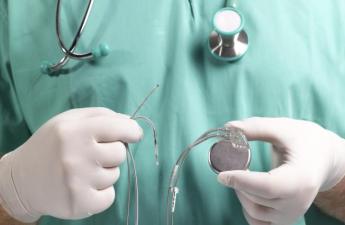
Pacemakers are used to treat two different types of arrhythmias:
- A fast heartbeat is known as tachycardia.
- A slow heartbeat is known as bradycardia.
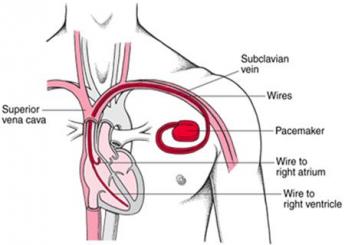
Some people need a special type of pacemaker called a biventricular pacemaker, three leads are attached to the right atrium and both ventricles on this pacemaker, also known as a cardiac resynchronization treatment (CRT) device. Patients with arrhythmias caused by advanced heart failure are treated with a biventricular pacemaker.
How are pacemakers fitted?
Your pacemaker surgery will take place in a hospital operating room. You'll be escorted to the operation and instructed to lie down on a surgical table. You'll be connected to cardiac monitors and have a cannula put into a vein in your arm before operation. During the operation, you will be given medicine to help you relax and relieve pain. Your doctor will conduct the following during your pacemaker surgery: Give you a local anaesthetic to numb the region around your collarbone. Create a space for the pacemaker battery by making a tiny incision around your collarbone. The pacemaker is threaded via a big vein on the right side of your heart. Using small screws, secure the end of the lead inside the heart. Program the pacemaker and test it to make sure it's operating properly.tuck the pacemaker battery beneath the skin in the pocket
Apply a dressing to the region and close the incision with stitches. After that, a bulge will appear surface of the skin where the pacemaker was implanted.
After the operation
Open heart surgery is a significant procedure that needs constant monitoring and post-operative care. After the surgery, a person may need to stay in the intensive care unit (ICU) for a few days to get further care.You may get out of bed with help when your bed rest period has ended. When you first get out of bed, the nurse will help you and check your blood pressure while you are lying in bed, sitting, and standing. To avoid dizziness from the bedrest time, walk gently while getting out of bed. When you are fully awake, you will be able to eat and drink.Heavy lifting and strenuous activity should be avoided over the next few months. For any discomfort, you may need to use over-the-counter medicines. Inquire with your doctor about which pain medications are the safest for you. You'll need special equipment provided by your doctor to connect your pacemaker to a phone line. It allows your doctor to obtain data from your pacemaker without having to visit the clinic.
Your pacemaker may be harmed if you use certain devices. For example, you should avoid:putting your phone or MP3 player in your pocket over your pacemaker standing for too long near certain equipment, such as microwaves, metal detectors, and high-voltage transformers.
Written by
Abhishek
Vaidam Health · Updated 25 Sept 2026
Content meets the Vaidam Policy and is medically reviewed
Medically reviewed by
Dr. Shruti Rastogi Chat
Chat