

Early Signs of Parkinson’s Disease
Parkinson’s Disease is a neurodegenerative disorder affecting the movements of the body. The disease cannot be cured completely. However, the symptoms can be relieved by various forms of treatment. Some of the most common signs are tremors that may later turn into slow movements and stiffness of the body.
Parkinson's disease involves damage to the cells in a specific area of the brain called “Substantia nigra”. These cells produce a chemical substance called dopamine. Dopamine is a neurotransmitter that helps in sending signals to other nerve cells. Reduced dopamine levels in Parkinson’s disease cause slowing down of the body movements. Unfortunately, the signs and symptoms of Parkinson’s disease only get noticed when 75% percent of the cells in Substantia nigra are dead.
The treatment cost of Parkinson's disease in India ranges between 7000-9900 USD and this is the major reason why people prefer traveling to India for their treatment. The treatment cost depends on the patient's medical history, overall health, and the type of treatment they opted for. India has several JCI accreditated hospitals with highly-skilled and experienced Neurosurgeons that provide affordable medical services to patients across the globe.
Know More
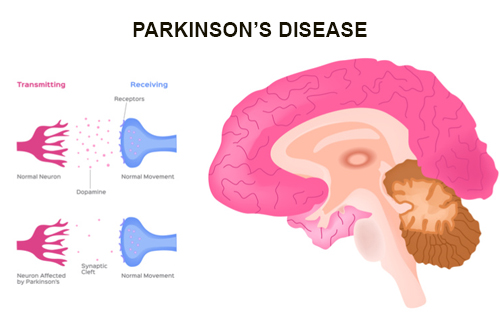
Possible Causes of Parkinson’s Disease
Although the exact cause of the death of these cells of nerve cells are not known. However, based on several kinds of research and statistics, the following conclusions have been deduced about the causes of the disease:
- Genetical - Most of the time, this disorder continues to get inherited within the families due to the defect in the genes and passage of those genes from one generation to another. People with a family history of Parkinson’s disease are more susceptible to acquire the disease than others.
- Environmental factors - Some of the scientists think that pesticides and herbicides may also be responsible for the disease. Moreover, automobile and industrial pollution also have a contribution.
- Drug-induced parkinsonism - It has been found that certain antipsychotic medications tend to increase the chances of Parkinson’s disease. Also, there have been cases where the condition was improved after stopping the medication.
- Certain brain conditions - Some brain disorders such as progressive supranuclear palsy, multiple system atrophy, and corticobasal degeration.
- Cerebrovascular diseases - Such diseases cause a continuous series of small strokes due to which some parts of the brain get dead.
Early Signs of Parkison’s Disease
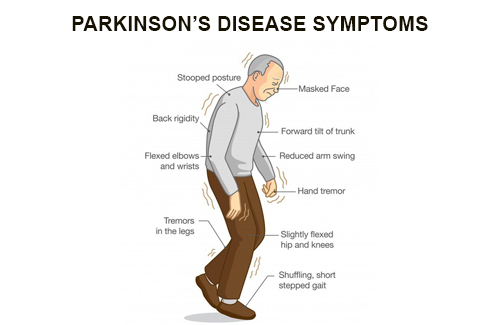
Even though it is hard to detect the absolute signs, there are small changes that can be noticed helping to diagnose the condition at an early stage. These changes are:
- Tremors - While some shaking after exercise or after intake of certain medications is considered to be normal, a slight tremor in the hand, fingers, or chin can be an early sign.
- Handwriting - The handwriting tends to change over time and get smaller as compared to the past. They tend to write smaller and more crowded words than before.
- Difficulty Walking and Moving - Another early sign is stiffness in the joints, due to which it gets difficult for the patient to move arms or walk properly.
- Increased Leaning - At the initial stage of Parkinson’s disease, people start leaning, slouching, and taking the wall support relative more than before.
- Insomnia - Turning and twisting in the bed at night and being unable to have a deep sleep is also one of the symptoms.
- Loss of Smell - There is an inability to smell foods like bananas, certain pickles, etc.
- Facial Masking - The facial muscles get weakened due to which the overall facial expressions look as if the person is depressed or sad, even if the emotional status is fine.
What are the Stages of Parkinson’s Disease?
There are fundamentally 5 stages of Parkinson’s Disease, which are elaborated below:
- STAGE 1 - This is a very mild stage, in which the symptoms are barely noticed except for minor changes. Usually, these changes take place on one side of the body.
- STAGE 2 - This stage manifests several symptoms like the stiffness of muscles, change in facial expression, trembling, and tremors. These may be seen as changes in posture, gait, and facial expression. The symptoms will spread to both sides of the body. It may take several months to years for the condition from stage 1 to stage 2.
- STAGE 3 - The manifestations take a leap at this stage where there is interference in the routine activities. The body gets slower, imbalanced, and has an increased number of falls. However, the patient is still able to do everything on their own.
- STAGE 4 - Quite significant changes occur when the disease progresses to stage 4. There is excessive difficulty in standing without any aid. Other muscle movements and reactions also get slowed down. The patient cannot live alone at place.
- STAGE 5 - This stage would need 24 hours assistance, as the patient is not able to do anything on its own. He/she would also need a wheelchair. Further, at a later stage, the patient may also have confusion and hallucinations.
How is it Diagnosed?
- There are no particular tests to exactly diagnose the condition. It is only based on the medical history, signs, and symptoms that the neurologist will diagnose provisionally.
- In addition to this, he will also do a neurological and physical examination. He will order single-photon emission computerized tomography SPECT scan called a dopamine transporter (DAT) scan.
- In addition, certain imaging tests such as MRI, CT, ultrasound of the brain, and PET scan may also be advised.
- Another test carbidopa-levodopa test, which is a medication for treating this condition. Significant improvement in the symptoms within a couple of days will confirm the diagnosis.
- The final differential diagnosis will be made on the basis of the signs and symptoms of the patient.
Treatment
The treatment is broadly categorized into medical and surgical treatment.
The Oral Medications Include,
- Levodopa
- Dopamine agonists
- Amantadine
- Monoamine oxidase-B inhibitors
- Catechol-O-methyltransferase inhibitors
The Surgical Treatment Includes,
- Deep Brain Stimulation - The procedure involves the implantation of electrodes through one or two wires placed under the skin in a particular part of a brain. A tiny current is passed via electrodes to stimulate the area and reduce the symptoms.
- Pump-delivered therapy - This is known as Duopa, in which a combination of levodopa and carbidopa is delivered through a small pump, which is surgically placed near the small intestine.
Such kind of treatment form is easily available in some of the best Neurology hospitals in India, which are well equipped with the best infrastructure and topmost neurologists to treat the patients at affordable costs.
Written by
Dr. Kavreen Arora
Vaidam Health · Updated 25 Sept 2026
Content meets the Vaidam Policy and is medically reviewed
Medically reviewed by
Dr. Bhawana Mittal Chat
Chat