

Liver Transplant in India: What You Need To Know?

Liver transplantation is a life-altering process for patients with end-stage liver failure or acute liver failure.
Liver transplantation surgery in India has become one of the best liver transplantation destinations in the world in recent years. Quality and cost are not mutually exclusive because of India's vast network of accredited hospitals, experienced surgeons, and sophisticated medical instrumentation.
More than 5,000 liver transplantations are performed annually in India, and the outcome is similar to that in affluent countries.
However, why is it that India stands out in liver transplant procedures?
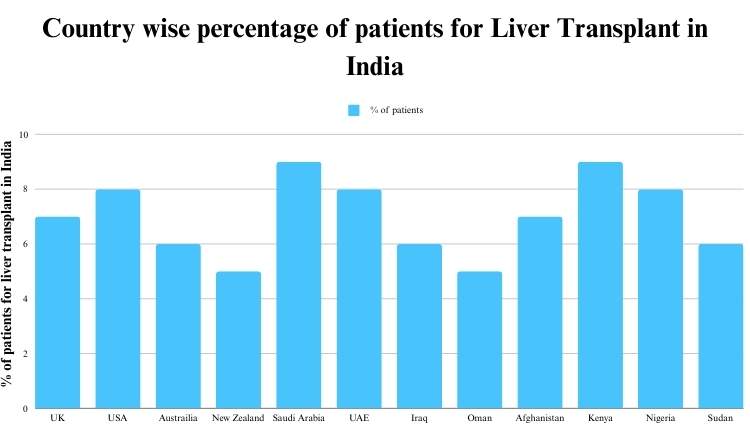
Besides the excellent outcome rates, the Indian medical tourism sector is booming, and patients around the world come to India for treatment.
- The factors contributing to the field include
- Affordable liver transplant cost in India
- Accessibility to top medical professionals
- The transplant of liver in India have a success rate and high standards of healthcare services.
What is a liver transplant?
Liver transplantation is a surgical operation that involves using a viable liver from a donor to substitute a diseased or damaged liver. The liver, as one of the most essential organs, plays a key function in the detoxification of the body, producing key proteins and aiding digestion.
Transplantation is indicated if the liver ceases to work correctly (as a result of chronic diseases like cirrhosis, liver cancer, or viral hepatitis). A liver transplant is generally suggested, as it applies only to patients suffering from end-stage liver disease—that is, a liver capable of carrying out its vital functions. With respect to saving lives and reversing impaired liver function, a transplant can, indeed, bring relief by "recovering" life.
Cadaveric liver transplantation in India involves the use of a liver from a deceased donor. This method is based on a structured process under the jurisdiction of law and ethics to guarantee fair distribution of organs. Cadaveric liver transplantation is an important tool to meet the increasing demand for liver transplantation, especially when there is a lack of living donors, which may provide a chance and lifesaving treatment to severely ill patients.
Why Choose India for Liver Transplant?
- World-Class Medical Facilities: India has advanced hospitals well equipped with cutting-edge technology and treatment equipment of liver transplants.
- Highly Skilled Surgeons: Experienced and internationally trained liver transplant specialists who have a proven record of successful transplants.
- Affordable Costs: Liver transplantation costs in India are considerably lower than in most western nations, making it a preferred choice for patients around the globe.
- High Success Rates: India has excellent liver transplant success rates comparable to global standards.
- Comprehensive Care: Availability of pre- and post-transplant postdischarge care (e.g., rehabilitation and counseling).
- Shorter Waiting Times: Optimised access to transplantation due to better organ donation programs.
Symptoms of Liver Disease Requiring a Transplant
Severely diseased patients can suffer from a variety of symptoms that compromise their quality of life. The following are the main symptoms suggesting a need for a liver transplantation.
- Jaundice: A yellow discolouration of the skin and eyes, suggesting impaired liver conjugation of bilirubin.
- Fatigue: Severe tiredness that doesn't improve with rest.
- Ascites: Accumulation of fluid in the abdomen, leading to discomfort and bloating.
- Mental Confusion: Hepatic encephalopathy occurs when the liver can't filter toxins from the blood, leading to confusion, forgetfulness, and altered consciousness.
- Easy Bruising and Bleeding: Liver injury can cause agammaglobulinemia and a consequent deficiency of clotting factors, which can cause a tendency for both bruising and epistaxis.
- Swelling of the Legs and Ankles: Swelling is caused by fluid retention due to impaired liver function.
- Weight Loss: Unexplained weight loss and poor appetite.
These signs typically get worse over time and suggest liver failure. When a patient shows signs of this, liver transplantation is usually the best option.
Procedure Details for Liver Transplant
The liver transplant procedure is divided into various stages. Some of them are:
What to Expect before the Procedure?
Patients, before receiving a liver transplantation, have to complete many preoperative examinations. These tests enable the doctor to decide whether the patient is operationally fit and whether an appropriate donor exists.
Tests may include:
- Blood Tests: To check liver function and overall health.
- Imaging Studies: For example, computed tomography scan (CT), magnetic resonance imaging (MRI), or ultrasonography for evaluating the liver and associated complications.
- Cardiac Evaluation: To ensure the heart is healthy enough for surgery.
- Psychological Evaluation: To establish if the patient is ready mentally for the procedure and recovery after the operation.
In addition to these tests, the patient's medical history, including any previous liver diseases, must be reviewed. The transplant crew will also evaluate the potential choices, for each patient, of benefits and risks of the operation.
What to Expect during the Procedure?
- Liver transplant surgery is carried out under general anaesthesia and takes approximately 6-12 hours.
- Liver surgeon excises the diseased liver and replaces it with a liver from a cadaveric donor.
- The procedure is performed via a deep abdominal incision and consists of the anastomosis of the transplanted liver to the main blood vessels and bile ducts of the patient.
- The complexity of the surgery depends on factors such as the patient's condition, the size of the liver, and the method used to secure the donor liver in place.
- The procedure is carried out with all the precautions to reduce complications, and the patient is continuously monitored.
What to Expect after the Procedure?
- After surgery, the patient is transferred to the intensive care unit (ICU) for continuous surveillance.
- The main issue in this period is to prevent the patient's body from rejecting a new liver.
- The transplant crew will treat the patient with immunosuppressants to avoid rejection and check the patient for signs of infection or other complications.
- Patients usually stay in the hospital for 1-2 weeks, depending on how well they are recovering.
- However, at this time period, the medical staff is going to pay special attention not only to controlling any pain and post-operative complications of the surgery but also to controlling bleeding or infection.
- At discharge, the patient will be required to take a strict course of daily medication, such as immunosuppressant drugs, for the rest of their life.
How Long Does the Procedure Last?
The length of a liver transplant is subject to the following factors. Most commonly, it takes from 6 to 12 hours on average, depending on the surgical procedure's complexity and the patient's status. But the whole process, from the initial screening to the post-operative care, can last up to a month.
Benefits of Liver Transplant
- Liver transplantation provides a variety of advantages for liver-diseased patients:
- Restored Liver Function: A successful allograft enables restoration of normal liver function, and thus, patients get back strength and general health.
- Relief from Symptoms: Generally, most patients show a significant amelioration of symptoms, like a decrease in fatigue, better mental clarity and the relief of jaundice and ascites.
- Improved Life Expectancy: Liver transplantation provides patients with considerably longer lives compared with the natural progression of liver disease to its end state.
- Improved Quality of Life: Transplant recipients, on the other hand, typically report improved quality of life (fewer health problems and better performance at household tasks).
Risks or Complications Associated With Liver Transplant
- Like any major surgery, liver transplantation carries potential risks. Although medical progress has dramatically decreased these risks, it is crucial for patients to know and understand the potential complications:
- Rejection: The body may implement a rejection mechanism for the new liver and treat it as an allogeneic graft. Immunosuppressive medications are required to prevent this.
- Infection: Immunosuppressive therapy increases the risk of infectious diseases for transplant recipients.
- Bleeding: There is a risk of excessive bleeding during or after surgery.
- Blood Clots: In blood circulation, blood clots can arise and lodge in the liver or elsewhere.
- Liver Dysfunction: The risk of a transplanted liver being unsuccessful is not so small.
- Organ Shortage: The most significant risk is the availability of a suitable liver donor. The donor's liver needs to be a blood type and size match to the patient.
Recovery Time for Liver Transplant
- Recovery in a patient after a liver transplant is different from patient to patient. In general, patients spend 1-2 weeks in the hospital. Full recovery can take 6-12 months.
- For this period, patients need to follow particular schedules of medication, visit the special centres to check themselves, and comply, individually, with measures to prevent the infection.
- It is usually possible to restore patients to a normal mode of living in 3-6 months, but they need to avoid post-exercise stress, which they need to control daily.
Liver Transplant Success Rate
India boasts an excellent success rate for liver transplants. Liver transplant recovery in India has a success rate of 85-90% by the first year after surgery, and many patients have long-term success and lead healthy lives for years after transplantation.
The liver transplantation process involves the assessment of the organ's quality, safe retrieval, and proper preservation to ensure the organ functions optimally after transplantation
- Dr. Subhash Gupta, Chairman at the Center for Liver and Biliary Sciences, Max Healthcare.
Liver Transplant Cost in India
Liver transplantation is much cheaper in India than in other countries. The price of a liver transplant in India is between ₹15,00,000 and ₹30,00,000 (approximately $18,000 and $36,000 USD).
In this price, surgery, donor-related costs, hospitalisation and post-operative attention are included. For patients who come from Western countries, the price is relatively done compared to what they have to pay for the same treatment option in the US, UK, or other developed countries.
Top Doctors for Liver Transplant in India
Here is a list of top doctors in India known for their expertise and high success rate of liver transplants
- Dr. Vivek Vij: He is a notable liver transplant surgeon with an experience of over 23 years. He has performed over 500 liver transplants with minimum complications and 2000 liver transplants with cumulative experience with his team.
- Prof. Dr. Mohamed Rela: He is a renowned surgeon known for his expertise in liver transplantation, chronic liver disease, and hepatopancreatobiliary (HPB) surgery and has performed more than 3000 liver transplant surgeries so far.
- Dr. Ajitabh Srivastava: Dr. Vivek Vij is among the leading liver transplant surgeons in India, having 31 years of experience. He is a top surgeon for liver fat removal surgery and has performed over 2500 successful liver transplants, handling both critical and subcritical cases.
- Dr. Sanjiv Saigal: For over a decade, he has spearheaded the medical team for liver transplantation in the most extensive liver transplant program in India. He has performed 1500 liver transplants, including both cadaveric and living donor transplants.
- Dr. Deepak Dubey: He is a famous urologist and renal transplant surgeon in the South India region with over 35 years of experience. His expertise is in Laparoscopic Urology, Renal Transplantation, Reconstructive Urology, robotic surgery and & urological procedures, and more than 500 laparoscopic live donor nephrectomies and renal transplants.
- Dr. Vivekanandan Shanmugam: A leading liver transplant surgeon with a thriving experience of more than 18 years. His expertise lies in the fields of Laparoscopic Surgery, Hepato-Biliary-Pancreatic, Colorectal Surgery, Abdominal Pain Treatment, Intestine Surgery, and Bariatric (Gastric Bypass) Surgery, with 750 successful transplants.
Top Hospitals for Liver Transplant in India
Here is a list of top hospitals in India that are well equipped and best medical facilities offering liver transplant
- Fortis Memorial Research Institute, Gurgaon – This hospital is known for its comprehensive liver transplant program and world-class medical facilities. It has a high success rate and offers personalised care for patients.
- Indraprastha Apollo Hospital, New Delhi – This centre is one of India's leading hospitals for liver transplants, with an experienced team of specialists and excellent post-surgical care.
- Apollo Hospitals, Greams Road, Chennai—This is a multi-speciality hospital in Greams Road that offers advanced healthcare services in cardiology, orthopaedics, and more.
- Medanta - The Medicity, Gurgaon- A super speciality healthcare hospital that provides world-class treatment options, including heart, liver, and kidney transplants.
- Artemis Hospital, Gurgaon- A multi-speciality hospital with 400+ best doctors, 11 centres of excellence & 40+ medical facilities.
How to Prepare for Liver Transplant in India?

- Get Medical Evaluations: Perform all necessary medical assessments, such as laboratory tests, imaging, and cardiac functional tests.
- Arrange Travel and Accommodation: The article outlines a visitor's trip to India, evaluating visa necessities, lodging, and transportation options.
- Consult with Doctors: Consult with your surgeon prior to surgery regarding expectations and wound care.
Vaidam Health can assist in managing all aspects of your treatment, from finding the best doctor to arranging travel and accommodation.
Did you know?
India is one of the lowest-cost locations for liver transplantation, and the practice is common for many patients travelling from places such as the US, UK and the Middle East, where liver transplantation procedures are successfully performed to get a liver transplant.
Begin Your Path Today: Transform Your Life with a Successful Liver Transplant
Liver transplantation in India can be the life-saving intervention required if one or a relative is undergoing the burden of liver disease. As one of the global centers of excellence in medical and surgical care, the cost of liver transplantation is very low, providing India as one of the preferred destinations for patients in need of liver transplants all around the world.
Take the Next Step: Contact Vaidam Health today to inquire about your treatment options and launch a liver transplant in India. We're here to help.
Frequently Asked Questions About Liver Transplant in India
1. Is liver transplant in India safe?
Yes, liver transplantation in India is safe as it is performed under the supervision of experienced transplant surgeons in certified hospitals with modern medical infrastructure2
2. Who is eligible for a liver transplant in India?
Patients with end-stage liver disease, liver failure, and some liver tumours may be considered for this after careful medical assessment by experts.
3. For what duration should I stay in India to undergo liver transplantation?
Usually, patients stay for 6-8 weeks encompassing preoperative evaluation, liver transplantation surgery, and postoperative recuperation and monitoring.
4. Can international patients get a liver transplant in India?
Yes, a number of Indian hospitals are accepting international patients, providing transplant packages as well as medical tourism support.
5. What are the documents needed for a liver transplant in India?
Medical documentation, identification evidence, living donor consent, and hospital-specific documents are usually needed.
Written by

Mariyum Naqvi
Vaidam Health · Updated 18 Dec 2024
Mariyum is an experienced medical writer with a Master’s degree in Biotechnology, specialising in transforming intricate scientific concepts into clear, engaging, and accessible content. With a strong passion for demystifying health and science topics, she excels at crafting content that resonates with diverse audiences, from industry professionals to general readers. Mariyum ensures that her writing is not only informative but also strategically designed to maximise reach and visibility in digital spaces.
Content meets the Vaidam Policy and is medically reviewed

Medically reviewed by
Dr. Bhawana Mittal Chat
Chat