

Contributing to 6% of total cancer cases, stomach cancer has also become a global concern with one of the most frequently diagnosed cancers in the world. More commonly known as gastric cancer, it affected over 10 lakh people worldwide in 2020 which mainly includes older people, generally aged 65 years and above.
Despite its frequent occurrence, the relief is that if diagnosed at early stages, stomach cancer can be cured completely. So, if you are considering stomach cancer treatment in Germany, you should know that the German doctors are highly skilled and experienced in providing the latest diagnostic facilities for accurate diagnosis.
Even if you are at the advanced stages of cancer, the hospitals offer innovative treatment methods like Cytoreductive Surgery, Hyperthermic Intraperitoneal Chemotherapy (HIPEC), Transarterial Chemoembolization (TACE), 3D-CRT, and IMRT to achieve better outcomes.
Also, the cost of stomach cancer treatment in Germany with advanced approaches is relatively lower than other developed nations. It ranges from USD 18000 to USD 22000.
Let’s understand stomach cancer, its risk factors and the cost of stomach cancer treatment in Germany. You will also get a list of the best oncology hospitals in Germany.
What is Stomach Cancer?
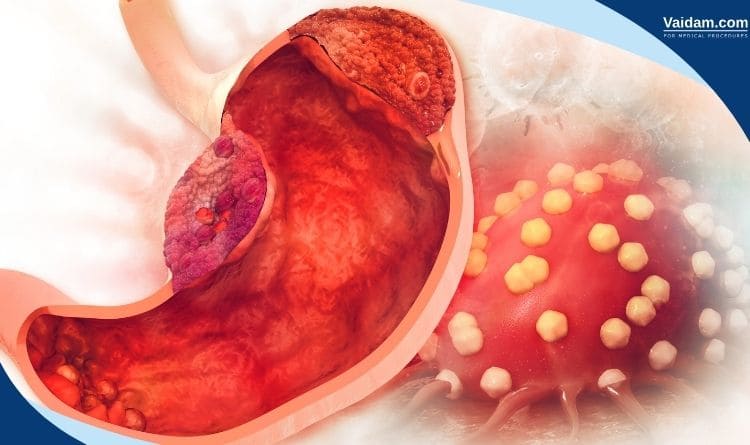
Stomach or gastric cancer is marked by the abnormal growth of healthy cells in the stomach, ultimately forming a tumour. This tumour can either be benign (will grow in size but won’t spread to other body parts) or malignant (will grow as well as spread to other body parts).
Stomach cancer can start from any part of the stomach and then spread to other body parts like the liver, lungs, bones, ovaries, abdominal cavity, etc.
The most common type of stomach cancer is adenocarcinoma (cancer that begins in glandular tissue). Other types of gastric cancer are primary gastric lymphoma (PGL), neuroendocrine tumours, and gastric sarcoma.
What are the Associated Risk Factors With Stomach Cancer?
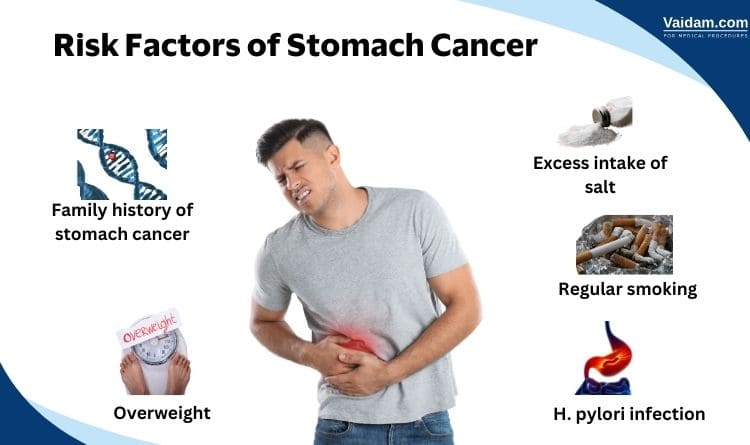
Risk factors comprise several conditions that increase the chances of getting a particular disease. Scientists have found various risk factors associated with stomach cancer, out of which some can be controlled, like smoking, while others, such as age or family history, can’t be changed.
Some common risk factors of gastric cancer are –
- Age: Older people in their 60s or 70s are at a higher risk.
- Gender: Men are more prone to develop stomach cancer than women.
- Geography: People living in East Asia, South & Central America, and Eastern Europe have higher chances of being affected by stomach cancer than people living in Africa and North America.
- Alcohol and Smoking: Consuming even three or more drinks daily increases the risk of stomach cancer. Smoking also increases the chances of stomach cancer, especially in the upper part. Tobacco consumption nearly doubles the rate of gastric cancer.
- Family History: First-degree relatives of a person with the disease have a two to three times higher risk than the general population. If more than one first-degree relative has the disease, the risk is about 10-fold higher.
- Helicobacter Pylori Infection: Long-term infection with H. pylori bacteria may lead to precancerous changes and atrophic gastritis.
- Epstein-Barr virus (EBV) infection: About 5 to 10% of gastric cancers are attributed to infection with the Epstein-Barr virus. EBV-linked stomach cancers are slow growing and are less likely to spread to other body parts.
What are the Treatment Options Available in Germany for Stomach Cancer?
The treatment of stomach cancer in Germany utilises the latest advancements in cancer care. and often managed with a triadic approach using surgery, chemotherapy, and radiation. Below are mentioned treatment options available in Germany:
Transarterial chemoembolization (TACE)
- Metastatic stomach cancer often gets to the liver and forms a secondary tumour foci there. TACE is the most common treatment approach used in such cases.
- It is a minimally invasive procedure in which emboli coated with chemotherapeutic drugs are introduced into the hepatic artery which block the blood supply to the tumour, making it deficient in oxygen and nutrients.
- Renowned for their advanced medical technology, Germany’s hospitals provide patients with access to top-tier TACE treatments, often integrated within multidisciplinary stomach cancer care programs.
Surgery
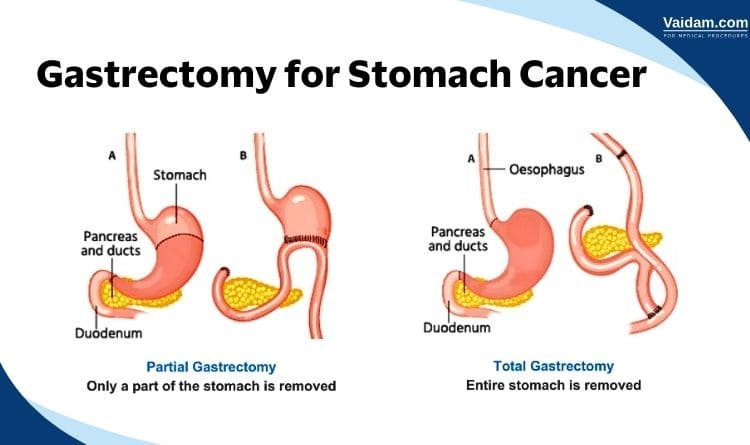
In German hospitals, cytoreductive surgery with HIPEC is a specialised procedure that is completed in two stages.
- First, the visible tumour is surgically removed (gastrectomy) by experienced surgeons.
- Then, the abdominal cavity is washed with heated chemotherapeutic agents at a temperature of 42 degrees Celsius to kill any remaining cancer cells.
This innovative treatment method is offered in various German hospitals, including those participating in clinical trials for peritoneal cancer.
Chemotherapy
- Chemotherapy involves using chemical agents to kill cancer cells. These agents can be given via mouth as pills or injected into veins.
- Germany’s medical institutions are equipped with the latest in drug delivery systems and precision medicine, offering targeted therapies to enhance the effectiveness of stomach cancer treatment in Germany.
Targeted Therapy
- Targeted therapy works in a different manner than standard chemotherapy.
- It is a relatively new type of drug therapy that involves using drugs that specifically target particular molecular structures on the basis of the presence of specific genetic mutations.
- In this way, unlike standard chemotherapy, targeted therapy does not affect every cell but acts explicitly on cells that have specific receptors on their surface.
- Hospitals in Germany offer targeted therapies like Herceptin for HER2-positive stomach cancers and ramucirumab for inhibiting blood vessel growth in tumours.
Immunotherapy
- The immune system of the body uses checkpoint proteins to identify normal cells vs. abnormal cells. Cancer cells have the ability to use these checkpoints and hide from the immune system.
- Immunotherapy involves using drugs (immune checkpoint inhibitors) that target these checkpoints.
- Treatment of stomach cancer in Germany with advanced immunotherapy including checkpoints inhibitors, monoclonal antibodies (mAb) offers promising recovery, particularly for patients with advanced (stage 4) or metastatic disease.
Radiation Therapy
- In radiation therapy, cancer cells are attacked with X-Rays or other particles with the intent to destroy them. It consists of a defined number of treatment sessions given over a period of time.
- Radiation therapy might be given prior to the gastric surgery in order to shrink the gastric tumour or after the surgery to eliminate any remaining cancerous cells. Gastric cancers that can’t be removed surgically are treated with radiation therapy to slow their growth and ease symptoms like pain.
- In Germany, stomach cancers are treated mainly using external beam radiation therapy, like three-dimensional conformal radiation therapy (3D-CRT) and intensity-modulated radiation therapy (IMRT).
- German hospitals use state-of-the-art linear accelerators to give radiation therapy. Newer techniques help in accurately delivering the radiation to the tumour without harming nearby organs like the bowels, lungs, kidneys, or spine.
With its advanced techniques and innovative approaches, treatment of stomach cancer in Germany ensures that patients benefit from the most effective and tailored strategies in their treatment journey.
Why Prefer Germany for Stomach Cancer Treatment?
The country has made its name in medical tourism and is one of the most chosen destinations among patients seeking stomach cancer treatment in Germany. Various factors have contributed to this exponential growth of medical tourism in Germany. Some of them are –
Research and Expertise of Cancer Doctors in Germany
- German hospitals have a strong network of research institutions that participate in clinical trials and experiments. The latest information is maintained at the German Centre for Cancer Registry Data (ZfKD) and German Cancer Research Center (DKFZ), employing more than 1,100 dedicated researchers.
- This commitment to research is complemented by highly skilled cancer specialists who are well-versed in the latest treatment technologies with regular training programs on the most recent advancements in cancer treatment.
Availability of Advanced Technology for Cancer Treatment in Germany
- Cancer hospitals in Germany are well-established to provide precise cancer care with the use CyberKnife, GammaKnife, and Da Vinci. Even the stage 4 cancer cases, which are quite hopeless when it comes to treatment, have potential for treatment.
- These technological advancements are complemented by innovative therapies such as dendritic cell therapy, thermal ablation, and Lu-177 PSMA therapy, making Germany, a suitable choice for best cancer treatment.
How Cost-Effective is Stomach Cancer Treatment in Germany?
Germany offers cost-effective treatment options for stomach cancer. The cost of stomach cancer in Germany is much less when compared to other developed nations. However, the country does not compromise on the quality of care and offers world-class medical services.
- The cost of Chemotherapy in Germany ranges between USD 15,000 and USD 20,500 (including the initial examinations, scans and consultations, and 1st dose of chemo - Outpatient).
- The cost of Radiation Therapy in Germany ranges between USD 20,000 and 38,000 (6 weeks of outpatient radiotherapy)
- The cost of Targeted Therapy in Germany ranges between USD 15,000-27,000 (depending on the drug being used).
- The cost of Gastrectomy in Germany ranges between USD 26,000 and 43,000. This may vary depending upon the extent of surgery.
- The cost of Immunotherapy in Germany is approximately USD 27,000 (including all preliminary and follow-up examinations).
- The cost of Transarterial chemoembolization (TACE) in Germany ranges between USD 13,000 and USD 20,000.
Note: These prices of therapy are tentative pricing and might vary from one hospital to another.
Which are the Best Hospitals for Stomach Cancer Treatment in Germany?
- Charité University Hospital: Located in Berlin, it is one of the most reputed and largest hospitals in Europe. Charite’s oncology division offers the highest quality care and combines an interdisciplinary treatment approach with the latest research findings. Charite also founded Molecular Cancer Research Center (MKFZ) in 2006 to boost basic oncology research.
- University Hospital Heidelberg: Established in 1388, it is one of the oldest medical centres in Germany. The hospital works in collaboration with the German Cancer Research Center, offering the latest scientific knowledge and skilled oncologists for precise treatment. Therapeutic options at the hospital include surgical procedures, including robot-assisted surgeries (DaVinci System), radiation therapies, including proton/carbon ion therapy, stem cell transplantation, and psycho-oncology.
- University Hospital Rechts der Isar- Renowned for its integrative approach to cancer and chronic disease treatment, this hospital has over 40 years of experience in blending conventional and alternative therapies offering care for patients suffering form cancer, Lyme disease, rheumatoid diseases etc.. The hospital combines advanced medical technology with evidence-based complementary therapies. This strengthens the immune system of the patient, reduces side effects, and improves quality of life. Rechts der Isar provides individualised therapy plans to enhance recovery prospect.
- Ludwig Maximilian University Hospital, Munich: With a 500-year-long tradition, the Ludwig Maximilian University (LMU) hospital treats over 500,000 patients each year. The hospital has a specific Comprehensive Cancer Center (CCC) that is recognized by the German Cancer Aid Organisation. The Department of Radiation Oncology offers a complete spectrum of radiological services, such as image-guided radiotherapy, MR-guided radiotherapy, CBCT, and brachytherapy.
- University Medical Center Hamburg-Eppendorf (UKE): Founded in 1889, University Medical Center Hamburg-Eppendorf is one of the leading hospitals in Germany. The Department of Oncology is equipped with 100 beds and treats 3300 inpatients with malignant diseases yearly. The outpatient clinic observes 21,500 patients annually.
Conclusion
To conclude, Germany provides a highly advanced and comprehensive approach to stomach cancer treatment. The country is known for its well-established medical infrastructure, cutting-edge technologies, and wealth of expertise in cancer care. Patients with stomach cancer can benefit from a range of treatment options that encompass surgery, chemotherapy, radiation therapy, immunotherapies, and targeted therapies.
However, it is crucial for patients seeking stomach cancer treatment in Germany to conduct their own research and select the best hospital according to their specific needs.
Frequently Asked Questions Related to Stomach Cancer Treatment in Germany
What is the best treatment for stomach cancer in Germany?
Germany is at the forefront of minimally invasive laparoscopic surgery, and advanced therapies such as targeted therapy and immunotherapy, including checkpoint inhibitors, are used for more advanced stages of stomach cancer.
Is Germany good for stomach cancer treatment?
When it comes to stomach cancer treatment, Germany is renowned for its world-class cancer centres for advanced research, as well as highly skilled oncologists and surgeons.
German hospitals use the latest medical technology, including robotic-assisted surgery and state-of-the-art imaging techniques, which contribute to better treatment outcomes for stomach cancer.
Are there any specialised centres for stomach cancer treatment in Germany?
Yes, Germany has special cancer centres, especially those dealing with gastrointestinal cancers like stomach cancer. Here, patients can receive customised treatments that involve innovative methods, such as advanced endoscopic procedures.
What is the cost of targeted therapy in Germany?
The cost of stomach cancer treatment in Germany involving targeted therapy ranges between USD 15,000 and USD 27,000, depending on the drug being used.
How much does a gastrectomy cost in Germany?
The cost of stomach cancer treatment in Germany with gastrectomy ranges between USD 26,000 and USD 43,000. The price may vary depending on the extent of the surgery.
How much does transarterial chemoembolisation (TACE) cost in Germany?
The cost of transarterial chemoembolisation (TACE) in Germany ranges between USD 13,000 and USD 20,000.



 Chat
Chat