

Dr. Sarath Babu one of the most proficient Interventional Cardiologists in UAE is presently serving as a consultant at Life Care Hospital Abu Dhabi. With an experience of more than 19 years, he has successfully performed more than 3000 coronary interventions. His educational qualification includes MBBS from Jawaharlal Institute of Postgraduate Medical Education and Research Pondicherry, MD from Post Graduate Institute of Medical Education & Research Chandigarh, and DM from Sri Venkateshwara Institute of Medical Sciences University, AP. His specialization lies in bifurcation, left main stenting, chronic total occlusions, vein graft stenting post-CABG, valvuloplasty, percutaneous device closures for structural heart disease, transracial Coronary angiograms, and complex coronary intervention including rot ablation. He is an esteemed member of the Cardiovascular Angiography and Interventions in the USA, the European society of cardiology, and the Cardiology Society of India. Dr. Sarath has contributed to several international publications, essays, and presentations.
Treadmill Test
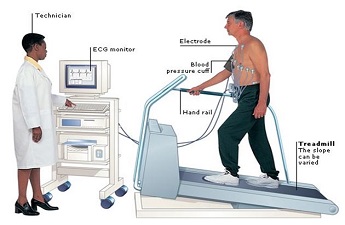
Also referred to as a treadmill stress test, a cardiac stress test, or an exercise stress test is done to determine how the body responds to strenuous exercise. It is conducted to diagnose patients suffering from or suspecting heart disease. During this test, a patient has to walk on a treadmill and is connected to an electrocardiogram (ECG) machine. The sensitivity and helpfulness of these tests are a bit limited. Although it is reasonably reliable and is a lot safer. When the results from this test are inconclusive some additional tests may also be required.
Why is it done?
- Risk of suffering from coronary heart disease
- To evaluate the functioning of your heart
- Indirectly measuring arterial blood flow to your heart
- To check the general level of physical fitness
- Determine if the patient’s lungs are in a good state
How to prepare?
- Remember that you will be exercising during the treadmill test and you need to take of few points.
- Wear suitable clothes that fit you comfortably
- Your shoes should be suitable for walking and jogging
- Avoid heavy or unnecessary eating or drinking for a couple of hours before the test
- Exerting on a full stomach can lead to nausea
- Prevent staying hungry for too long or you may feel weak during the test
- Ask your doctor whether the medication needs to be temporarily discontinued or stopped for a day or two before the test
How is it done?
- The electrodes will be placed to your chest
- In the beginning, your heart rate and blood pressure will be measured when you are at rest.
- Then the measurements will be done when you are on the treadmill.
- First at a mild warm-up speed and then gradually at an increased speed.
- The safe protocol will be followed till you reach a certain heart rate.
- In case the readings are dangerous or become excessively unsteady or you start feeling uncomfortable the test may be stopped prematurely.
Take Away
The simple principle behind the treadmill test is to check whether the blood is flowing through the channels properly or not. In case there seems a narrowing in the arteries that is reducing the blood flow, then during this test, it will be easily detected. For more details contact Dr. Sarath Babu one of the best Interventional cardiologists in Abu Dhabi. You can meet him at Life Care Hospital, Abu Dhabi.
 Chat
Chat