

Stem cell therapy has been a major breakthrough in regenerative medicine, currently offered by several research focused nations such as the USA, China, India, France, Germany, the UK etc.
In the series of stem cell achievements, Germany accounts for approximately 4% of all global clinical trials involving pluripotent stem cells. More than 100 scientists are continuously making efforts to shape the future of regenerative medicine and setting global standards in stem cell therapy in Germany.
One of its standout achievements is in the area of vision restoration, particularly with a promising treatment for Stargardt disease — an inherited retinal disorder that primarily affects the macula, the most critical part of the retina responsible for central vision.
Let’s explore how Germany excels in stem cell research and innovation.
What Makes Germany a Leader in Stem Cell Therapy?
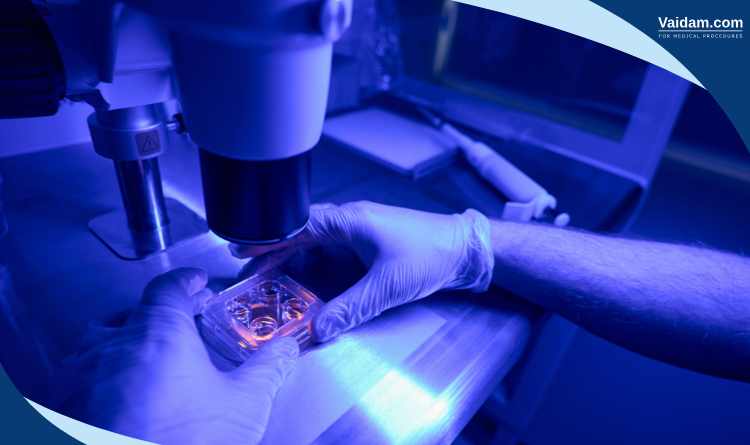
Germany has always been at the forefront of medical advancements, especially in regard to advanced technologies such as regenerative medicine.
- Germany stands out in this medical innovation, accounting for 4% of clinically approved trials under the European Medicine Agency (EMA).
- The German Stem Cell Network (GSCN) is a prominent organisation in Germany which connects clinical researchers and medical professionals, creating a unified platform for interdisciplinary knowledge exchange in stem cell biology and regenerative medicine.
- Around 110 of Germany’s leading scientists are dedicated to advancing stem cell science—whether through fundamental or applied research, or by addressing the ethical, societal, and legal dimensions of stem cell technology.
This clearly justifies how Germany holds the 12th spot in the 2020-21 Global Medical Tourism Index, making it one of Europe’s premier destinations for medical tourism, with thousands visiting annually for high-quality medical facilities.
Let’s start with the basics by understanding what these stem cells are.
What are Stem Cells and their Sources?
Often regarded as precursor cells, stem cells possess the remarkable potential to give rise to new mature cells.
Inside the cell, pathways like the Wnt, Notch, and Hedgehog signalling pathways respond to external signals and control the gene expression that regulates stem cell division.
Now, you must be wondering where these stem cells are coming from. Let’s discuss them briefly.
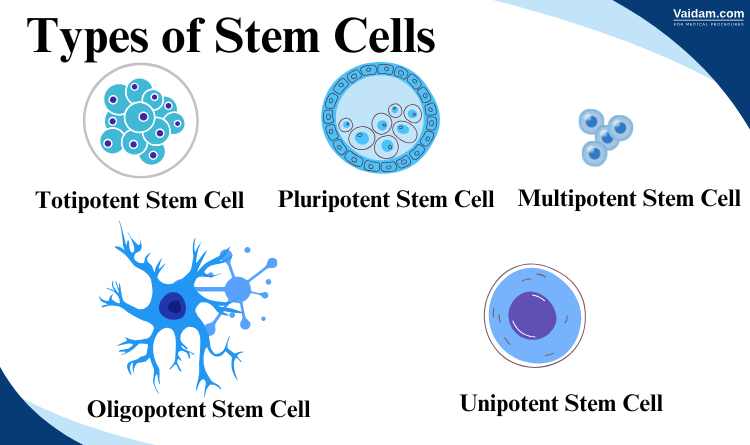
The source of stem cells can be categorised into:
Embryonic stem cells (ESCs)
These are obtained from embryos three to five days old, then referred to as blastocysts and are pluripotent in nature, containing around 150 cells.
In Germany, the production of human embryonic stem cell (hESC) lines is prohibited under the 1990 Embryo Protection Act. However, the Stem Cell Act (2002) permits the import of hESCs exclusively for high-priority research purposes.
Adult stem cells
As compared to embryos, these are less potent and can barely develop into other types of cells in the body. Being multipotent in nature, they can differentiate into cell types associated with the tissue they reside in.
Induced Pluripotent Stem Cells (iPSCs)
Scientists have now developed a method to convert ordinary adult cells back into stem cells with almost the same properties as embryonic stem cells, called induced pluripotent stem cells or iPSCs.
Perinatal stem cells
Stem cells have also been identified in perinatal sources like amniotic fluid and blood from the umbilical cord. These cells are capable of differentiation into other specialised cells, making them even more promising for medical use.
Interesting Facts About Stem Cells
- Early trials of stem cell treatments for Type 1 diabetes have shown a reduction in insulin dependence in 63% of patients
- The global stem cell market is projected to reach $25.68 billion by 2028, growing at a compound annual growth rate (CAGR) of 8.3% from 2021 to 2028.
- As of 2023, there are over 9,000 clinical trials registered globally involving stem cells, ranging from regenerative medicine to cancer treatment.
Stem Cell Therapy Process: A Step-by-Step Guide
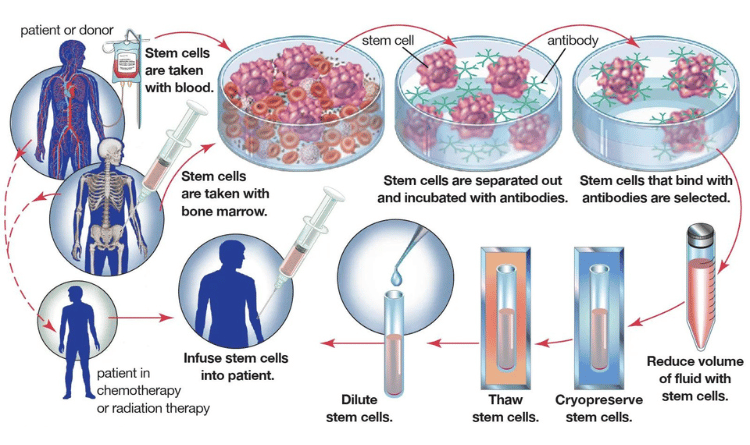
The journey of stem cell therapy in Germany begins with a thorough evaluation of your medical history, current health status, and specific conditions.
Let’s begin with the steps of stem cell therapy to understand the procedure.
Collection of stem cells
Depending on the therapy type, stem cells can be harvested from different sources, which include bone marrow, peripheral blood, or umbilical cord blood.
Processing and Preparation of Stem Cells
After collection, the stem cells are processed in a laboratory. The steps include:
- Isolating and purifying the cells
- Assessing their quality (Quality control)
- Genetic modification of stem cells, if required (gene therapy)
- Conditioning regimen of the patient using high doses of chemotherapy or radiation to destroy diseased cells and suppress the immune system
Stem Cell Infusion
- The infusion is typically performed in a hospital setting, often in a dedicated infusion room to monitor the patient closely.
- The stem cells are introduced into the patient’s body through a central venous catheter or a peripheral intravenous (IV) line, and the process usually takes a few hours.
Then, the stem cells travel through the bloodstream to the bone marrow, where they settle into the bone marrow and start producing new blood cells.
Post-stem Cell Therapy Care and Monitoring in the Hospital
While stem cell therapy holds great promise for treating various diseases, proper care is necessary to avoid complications such as:
- Bacterial, fungal and viral infections due to weakened immune response
- Graft-versus-host disease (GVHD) occurs primarily in allogeneic transplants when the donor’s immune cells attack the recipient’s tissues.
- Engraft syndrome, with a 7-11% incidence, occurs when the transplanted stem cells start to engraft and produce new blood cells, leading to inflammation.
Some patients have psychological stress post stem cell therapy, which is also managed during the monitoring phase.
Broad Therapeutic Potential of Stem Cell Therapy
Stem cell emerges as a powerful and effective approach for treating a range of complex human diseases, including:
Neurodegenerative diseases
The successful generation of stem cell therapies targets the progression of irrecoverable neurodegenerative diseases, including:
- Parkinson’s disease
- Alzheimer’s disease
- Amyotrophic Lateral Sclerosis (ALS)
- Spinal Cord Injury
- Multiple Sclerosis (MS)
Ocular (Eye) diseases
Since the eye is an immune-privileged site, many clinical trials for stem cell-based therapy target ocular diseases such as
- Retinitis pigmentosa (RP)
- Age-related macular degeneration (AMD)
- Stargardt disease
Sjögren's syndrome (SS)
A systemic autoimmune disease, marked by dry mouth and eyes, Sjögren’s syndrome involves treatment with mesenchymal stem cells (MSCs) which suppresses autoimmunity with subsequent restoration of salivary gland secretion in patients.
Diabetes
In both type 1 and type 2 diabetes, the beta cells are affected, and the pancreas does not efficiently regenerate islets from adult stem cells. Pluripotent stem cells (PSCs) are the cells of choice for beta cell replacement strategies.
The ability to create iPSCs from adult cells has opened up new avenues for regenerative medicine, allowing us to generate patient-specific cells for disease modeling and therapy.
Shinya Yamanaka, Nobel Laureate and pioneer of induced pluripotent stem cells (iPSCs)
Stem Cell Therapy Cost in Germany
Stem cell therapy in Germany is utilised to treat various forms of blood diseases, autism, optic atrophy, parkinson’s disease, and other severe conditions. In recent years, intraosseous stem cell transplantation from umbilical blood has been increasingly used in Germany, allowing stem cells to develop more rapidly.
The stem cell therapy cost in Germany ranges between $ 16,000 and $ 22,000.
Stem Cell Treatment Centres in Germany
Stem cell therapy in Germany is supervised by stringent regulations and guidelines to ensure the safety and efficacy of treatments. The German Medicines Act and the Transplantation Act govern the use of stem cells, emphasising ethical practices and patient protection.
Following the guidelines, some of the leading hospitals in Germany providing Stem Cell Therapy are listed below:
University Hospital Heidelberg
This is one of the most modern hospitals in Europe that offers almost all possible treatments for rare and common diseases. The hospital ensures treatment with cutting-edge medicine on an international level for the benefit of the patients. Every year, around 27000 patients from around the world receive treatment in this hospital.
University Hospital Rechts der Isar
The hospital provides treatment with excellent state-of-the-art medical devices. They use innovative therapies and give comprehensive medical care by their highly qualified, committed specialists. They treat patients according to the latest therapy concepts, including conventional and high-dose chemotherapy using stem cell transplantation.
University Hospital Cologne
This hospital is one of the best stem cell therapy centres in Germany. Recognised as an important research centre, it is developing new treatment methods and actively driving medical innovation. The hospital provides outstanding medical care and treatment to patients.
Searching for Stem Cell Therapy in Germany? Vaidam can assist you!

We understand that planning and arranging to get your stem cell therapy in Germany at an affordable cost is challenging.
- As soon as you submit the inquiry at vaidam.com, a case manager would be assigned to you to provide a personalised medical treatment plan.
- Vaidam gets opinions and quotes from leading Cancer Specialists in Germany and assists patients in selecting the right healthcare centre.
- Vaidam assists in medical visa application, logistics and complimentary airport transfers.
- Once you arrive in Germany for treatment,Vaidam team gives on ground assistance to the patient at each step.
- After completion of treatment, the Vaidam team assists you in a smooth return to your country by completing travel-related formalities & finally dropping you at the airport.
We will take care of all the logistics so that you can focus only on recovery. Let us take care of your medical journey into Germany without adding any hassle to it.
As we advance in stem cell research, we must remain vigilant about the ethical implications. The potential to manipulate human cells brings forth questions about consent, genetic modification, and the definition of life itself.
David Baltimore, Nobel Laureate in Physiology and Medicine
Frequently Asked Questions About Stem Cell Therapy in Germany
Is Stem Cell Therapy legal in Germany?
Germany follows strict regulations to ensure ethical practices in stem cell research. The Embryo Protection Act (1990) restricts the creation of embryonic stem cells from human blastocysts. However, the Embryonic Stem Cell Act (2002) allows the import of embryonic stem cells derived from surplus IVF embryos for research purposes, but not their creation within Germany.
What is the Stem Cell Therapy Cost in Germany?
The cost of stem cell therapy in Germany typically ranges from $16,000 to $22,000, depending on the specific treatments needed.
Is Stem Cell Therapy in Germany FDA-approved?
While certain stem cell treatments are approved by FDA within the U.S. for specific complications, many stem cell therapies offered in Germany operate under their own national health regulations, such as European Medicines Agency guidelines.
How do the Stem Cell Therapy Centres in Germany ensure the best outcomes?
Top stem cell therapy centres in Germany utilise advanced technology, experienced professionals, personalised treatment plans, and extensive follow-up care for optimal patient outcomes.
What is the typical duration for a stem cell transplant in Germany?
A stem cell transplant typically lasts several weeks, including preparation, collection, transplant, and recovery phases in the hospital.



 Chat
Chat