

Tips from Facial Plastic Surgery Expert Dr Nirmala Subramanian
Cosmetic surgery is a form of plastic surgery that seeks to improve a person's look; nevertheless, it should be used with prudence. It seeks to restore function and offer a normal look to a damaged area of a person's body, such as after a mastectomy. Dr Nirmala Subramanian is best cosmetic surgeons in Chennai. She is practising for the last 38 years. Her vast experience reflects in her service. She accomplished various milestones in these years.

She is working as a Consultant at Apollo Cosmetic Clinic MRC Nagar, Chennai. It is one of India’s finest institutes for cosmetic surgery.
Dr Nirmala Subramanian completed her Bachelor in Medicine (MBBS) from the All India Institute of Medical Sciences (AIIMS), New Delhi in 1972. She subsequently completed her Masters in Science (MS) - General Surgery from the All India Institute of Medical Sciences, New Delhi in 1974. Her specializations lie in Dermalogical procedures range from - peels, lasers, wart removal, skin and nail-related problems.
In this article, we will discuss about the Facial Plastic Surgery procedure.
Facial Plastic Surgery: A Brief Outlook
Because our facial expressions allow us to engage and communicate with one another, facial plastic surgery can be beneficial. Our physical appearance influences how others see us. While some people choose to alter certain aspects of their appearance, others are born with facial deformities such as a cleft lip, a birthmark, or other birth defects. Many problems, such as the effects of ageing, sun damage, or past face injuries, can, fortunately, be addressed by treatments done by a qualified surgeon.
Why Should I Think About Facial Plastic Surgery?
Cosmetic surgeons diagnose and treat a variety of problems affecting the entire face, nose, lips, ears, and neck. Facial plastic surgery is a subspecialty of otolaryngology with two subspecialties: reconstructive and cosmetic.
Reconstructive plastic surgery is performed on individuals who have birthmarks on their faces, cleft lip and palate, protruding ears, and a crooked grin that interfere with normal function. This form of surgery can also be used to treat problems caused by accidents, trauma, burns, or previous surgery. Furthermore, certain reconstructive operations are necessary to address pre-existing illnesses such as skin cancer.
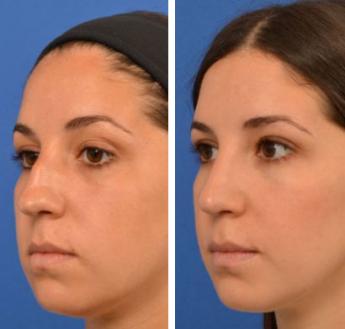
Cosmetic face plastic surgery is intended to improve the aesthetic look of facial structures and features. Facelifts, eye lifts, rhinoplasty, chin and cheek implants, liposuction, and treatments to address facial wrinkles are all common procedures. Cosmetic Surgeons are well-trained to deal with all of these issues.
What Kinds of Treatment Are Available There?
Chemical peels, microdermabrasion, and injectables are non-surgical procedures and methods that can assist with various face problems. Botox®, Dysport®, Restylane®, Juvederm®, Radiesse®, Sculptra®, and other fillers that may be injected under the skin to enhance the look of the face are examples of injectables.
Surgical facial plastic procedures include the following:
- Rhinoplasty/Septoplasty—Outside and inside nose surgery in which cartilage and bone are repaired and sculpted to improve the nose's look and function.
- Blepharoplasty—Surgery on the upper and/or lower eyelids to enhance their function (such as sagging eyelids) and/or appearance.
- Browlift—A procedure used to treat forehead wrinkles and drooping brows.
- Rhytidectomy—Skin tightening and wrinkle removal surgery performed on the face and neck.
- Liposuction is a surgical procedure used to remove extra fat under the chin or in the neck.
- Facial Implants—Surgery to make particular facial features (cheek, lips, chin) more prominent and defined.
- Otoplasty is a surgical procedure that reshapes the cartilage of the ears to make them protrude less.
- Skin Surface Procedures—Surgery that uses lasers, chemical peels, or derma-abrasion to enhance skin smoothness.
- Facial Reconstructive surgery to rebuild deformities in the skin of the face caused by prior surgery, injury, or disease, including reconstruction after cancer surgery, scar revision, fixing of prior facial trauma, the expulsion of birthmarks, and correction of congenital anomalies of the skull, palate, or lips.
What Should I Do to Get Ready for Facial Plastic Surgery?
You will feel more at peace if you know what to expect from facial plastic surgery. Certain hazards may include nausea, numbness, bleeding, blood clots, infection, and bad responses to the anaesthetic, depending on you and your body. Furthermore, if you smoke, you should abstain from doing so for two weeks before your operation in order to maximise recovery after your treatment.
Most plastic surgery procedures do not need a lengthy hospital stay. Some procedures, depending on the scope of your operation, can be done as an outpatient. Other operations may necessitate an overnight or two-day hospital stay. In any case, before you are discharged from the hospital, your surgeon will explain any extra care you need to take while healing at home with you. You will be given information on how to care for your incision. About a week following the surgery, sutures and surgical staples will be removed in the clinic. Your surgeon should also explain any specific dietary restrictions you should observe, medications you should take or avoid, and any activity limitations you should be aware of.
When swelling and bruises have subsided and their look has improved, most patients feel safe returning to work one to two weeks after surgery.
Written by
Abhishek
Vaidam Health · Updated 25 Sept 2026
Content meets the Vaidam Policy and is medically reviewed
Medically reviewed by
Dr. Shruti Rastogi Chat
Chat