

Rehabilitation in Germany
According to Statistisches Bundesamt (Destatis), nearly 1.69 million people received in-patient rehabilitation in 2019 and globally an estimated 2.4 billion people are leading a life with health conditions demanding rehabilitation. Nowadays, rehabilitation has become an integral part of leading a normal and healthy life.
What is Rehabilitation?
Rehabilitation is the care that is taken in order to make an individual live a completely functional and independent life. Irrespective of age group, a child or a senior citizen can choose rehabilitation for being able to lead an everyday normal life. Rehabilitation is done by addressing their existing difficulties.
Who Needs Rehabilitation?
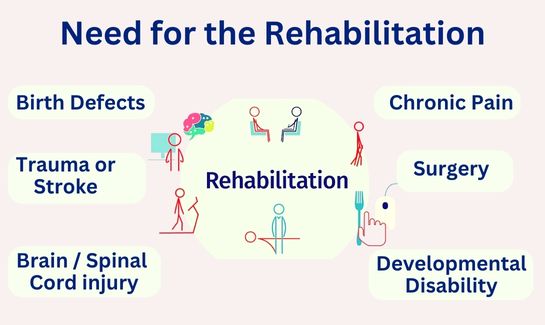
Certain conditions in life push people incapable of performing their daily tasks independently. It can be a
- Severe infection
- Trauma, stroke or surgery
- Brain or spinal cord injuries at work or sports
- Certain birth defects
- Developmental disabilities like cerebral palsy, autism, Down’s syndrome etc.
- Chronic pain in any part of the body
People suffering from prolonged exposure to any of these issues cannot perform their daily tasks independently and require someone to assist and help them out. Rehabilitation assures improving the physical, motor, mental and cognitive abilities so that a person is less dependent on others.
Rehabilitation- People's Belief and Truth?
Most often people think of rehabilitation as the basic requirement for those suffering from physical disabilities. The actual truth is rehabilitation is for anyone who has a compromised normal life irrespective of age, gender, or health condition either acute or chronic.
Also, some people treat rehabilitation as a luxury health service chosen as an alternative to the treatment. This is not true since rehabilitation procedure differs from person to person based on their need and is never an option over medical treatment.
What Procedures or Therapies are Followed When One Plan for Rehabilitation?
The rehabilitation process differs from patient to patient.
Suppose a person suffering from chronic back pain would be rehabilitated by certain exercises and medicines.
While a person suffering from depression would be provided with psychological support.
A person who faced major burns will be treated with medicines and cosmetic surgeries but will be rehabilitated with positioning and splinting techniques to ensure skin healing and regaining movement.
Whatever the process is, the main goal of rehabilitation is to regain independence.
What Kind of Therapies Can One Expect in Rehabilitation Therapy?

A team of healthcare providers figure out the treatment goals and treatment plans for each patient. Based on the patient's goals, rehabilitation therapy varies.
- Physical therapy: Comprises activities and special exercises to regain balance, movement, and functioning and to reduce any localised pain. Persons who suffered traumatic spinal or brain injury, and who have faced amputations require physical therapies.
- Occupational therapy: Aims to restore the ability to lead an independent life by working with motor skills and adaptive devices. Occupational therapists work out to retain the patient's ability to perform daily tasks like brushing, eating, dressing up etc.
- Speech therapy: Help with language, understanding, speaking and swallowing. Children with learning disabilities, adults with Parkinson's disease, cerebral palsy, and traumatic brain injury require speech therapy.
- Vocational therapy: Imparts skills to go to school or the workplace after an injury or any medical illness.
- Cognitive rehabilitation therapy: It works to improve the patient's memory, thinking, planning, and reasoning. Patients who have undergone a severe brain injury and have lost their thinking abilities require cognitive rehabilitation therapy.
- Recreational therapy: Include art and music to help to gain thinking, emotions, and expression along with social well-being.
- Assistive technology: Includes training the patients for using wheelchairs, walkers, prosthetics, orthotics, crutches, cochlear implants and alternative communication devices. Patients who underwent sports injuries, traumatic spine injuries, and limb amputations require either temporary or permanent assistive technology. People born with congenital disorders like spinal muscular atrophy also require assistive technology.
- Psychological counselling and nutritive counselling for the patient well being.
- Drug rehabilitation is provided for drug addicts. The therapies that follow are psychotherapeutic treatment where the patients are helped to get rid of addiction through a series of counselling sessions and given medication by the experts. Some patients are led into a spiritual path so they do not require to get back to addiction again in their lifetime. This is more psychological counselling with some medication to fight depression.
How Long Does a Rehabilitation Procedure Take?
Since each rehabilitation procedure is different to the other, and rehabilitation is more a patient-centric procedure, the time taken for each patient varies. Rehabilitation from stroke may take 1 month to 1 year. Some post-operative procedures like amputation or knee replacement may range from 1 month to 6 months or more, depending on the patient's ability to cooping with the techniques. Some rehabilitations like cerebral palsy require a lifetime period.
How Long Can a Patient Expect Post-Rehabilitation Effects in their Life?
Rehabilitation therapy basically aims at enhancing the patient's performance. It can be said as the comprehensive programme deals with overall well-being rather than medicating the specific ailment that the patient is suffering from.
It is putting together the broken parts of a patient's life from social, emotional, physical, medical and vocational corners. Rehabilitation therapists do not focus on a single specific organ system.
Although the medicine or exercises are prescribed aiming at the movement or strengthening of a specific limb or joint, the therapy works together on the emotional and social behaviour which will have long-term benefits for the patient along with their family.
Problems like cerebral palsy are associated with multiple issues like swallowing, learning abilities, mobility, speech and communication problems. Depending on the intensity of the condition, the therapy varies and patients are trained on using assistive devices, speech, and swallowing issues. These patients can expect lifetime benefits through rehabilitation that their living is less dependent on others.
Top Hospitals for Rehabilitation in Germany
- Nordwest Hospital, Frankfurt: It is one of the biggest hospitals in Germany having a 582-bed capacity. It accommodates nearly 22000 inpatients in a year.
- Sachsenhausen Hospital, Frankfurt: It is a multispeciality hospital having ISO 9001 certification. It has sleep research laboratories that can cure several types of insomnia.
- Helios Specialist Clinic Vogelsang, Gommern: It is a 160 bedded multispeciality hospital with rheumatology-centred services dealing with arthritis, and joint and ligament problems. It also has language translator services to help foreign patients.
- Kliniken Schmieder Clinic, Heidelberg: It is an internationally renowned centre for neurological rehabilitation. It accommodates nearly 200 patients every year with rehabilitative recovery from traumatic brain injuries.
Top Doctors for Rehabilitation in Germany
- Dr. med. Markus Bertram: He is a reputed neurologist having 30 years of experience in early neurological rehabilitation.
- Prof. Dr. med. Mircea Ariel Schoenfeld: A well-expertise neurologist with 35 years of experience. His area of specialisation includes clinical neurophysiology, cognitive neurology and functional neuroimaging.
- Prof. Dr. med. Marina Backhaus: She is a rheumatologist by profession and specialised in habilitation in various rheumatological and autoimmune disorders.
- Dr. med. Arne Hansen: A well-known habilitation expert in rheumatology having 29+ years of experience.
- Dr. med. Holger Blasing: A renowned neurologist with 21+ years of expertise in dealing with post-stroke depression and cognitive deficits after critical illness.
What Would be the Average Cost of Rehabilitation in Germany?
The rehabilitation costs differ for each patient since the concept of rehabilitation revolves around being patient-centric. The benefit of rehabilitation in Germany is that the treatment prices do not vary much for foreign patients. The average costs are listed below,
- Cardiological rehabilitation: 810.74 USD per day
- Orthopaedic rehabilitation: 373.79 USD per day
- Neurological rehabilitation: 918.43 USD per day
- Paediatric neurological rehabilitation: 1023.00 USD per day
What is Special About Rehabilitation in Germany?
The recovery of patients post-surgery is dependent mainly on rehabilitation procedures. Germany is one of the best places on the globe to offer rehabilitation for patients with diverse needs. It must be admitted that Germany has the finest equipment and modernized clinics to help people coming from all over the world.
The best-trained doctors have years of experience in dealing with neurological and orthopaedic problems. Locomotor dysfunction due to disorders of the spine, and joints and rheumatic and inflammatory disorders are some of the major health problems for which rehabilitation procedures are available in Germany.
Procedures like electrotherapy, pet therapy, lymphatic massage, underwater therapy, medical massage, mud therapy, halotherapy, and robotic walking systems are all followed at rehabilitation centres.
Apart from this the rehabilitation centres also provide nutritionist support for dealing with swallowing disorders.
Certain disorders like cerebral palsy require a lifetime rehabilitation like some exercises that improve posture and motor skills by reducing muscle rigidity. This requires follow-up even after discharge for a lifetime and the German rehabilitation centres provide counselling for the patient relatives or their immediate attendees.
Does One Need a Medical Visa for Rehabilitation in Germany?
Patients having nationality from one of the third world having a free visa regime with countries of the Schengen area, do not require a visa if the therapy plan is less than 90 days. They can directly proceed with the medical treatment arrangements with the hospital. However, if the hospital stay will be greater than 90 days, the patients have to attend the visa processing with the necessary documents.
- Passport
- Europe travel health insurance papers
- Doctor's certificate stating the medical condition and the need for specific treatment
- Confirmed accommodation and medical certification from the german hospital stating that the prescribed treatment is available at the health centre
- Proof of civil status
- Proof of financial status
Role of Vaidam Healthcare
Vaidam has been helping medical travellers from different countries to get the best treatment in the best hospitals in different nations including Germany. To get support from Vaidam’s team, you are free to raise a request quote.
To Conclude
Germany is the best place for planning rehabilitation across the world. With the best and finest equipment and well-trained professionals, Germany offers the best rehabilitation procedures for a wide range of health complications.
Frequently Asked Questions (FAQs)
Is it safe to choose rehabilitation?
Ans: Yes it is safe to choose rehabilitation. Since the patient is in a safe and supportive environment with trained professionals having a medical background. They can clearly understand the patient's needs and help them overcome obstacles in leading a normal life.
What diet should be taken during rehabilitation?
Ans: Rehabilitation that follows a critical medical illness has to ensure the patient's recovery at a progressive pace. The diet varies according to the medical condition and is generally taken care of by the nutrition specialist at the rehabilitation centre.
What is the success rate of rehabilitation therapy?
Ans: Nearly 80% of patients report having benefitted from choosing rehabilitation that has improved their quality of life by decreasing their dependency.
What things should be ensured when choosing a rehabilitation centre?
Ans: While choosing a rehabilitation centre it is important to check if the facility provides the required services and how trained the professionals are and if the physician is certified in Physical Medicine and Rehabilitation (PM&R).
Written by
itikarlapalliprathyusha
Vaidam Health · Updated 25 Sept 2026
Content meets the Vaidam Policy and is medically reviewed
Medically reviewed by
Dr. Shruti Rastogi Chat
Chat